You have worked hard for 40 or 50 years to build your savings, grow your investments, and build your business. You went without. You sacrificed. You worked long nights and made choices other people were not willing to make. Now you are reaping the rewards of a life of diligent, faithful work. Congratulations. This is an exciting season.
But it also comes with a hard truth. At some point, the Lord will call you home, and you cannot take what you have built with you. It will pass to the next generation.
So the real question is this. Is the next generation ready?
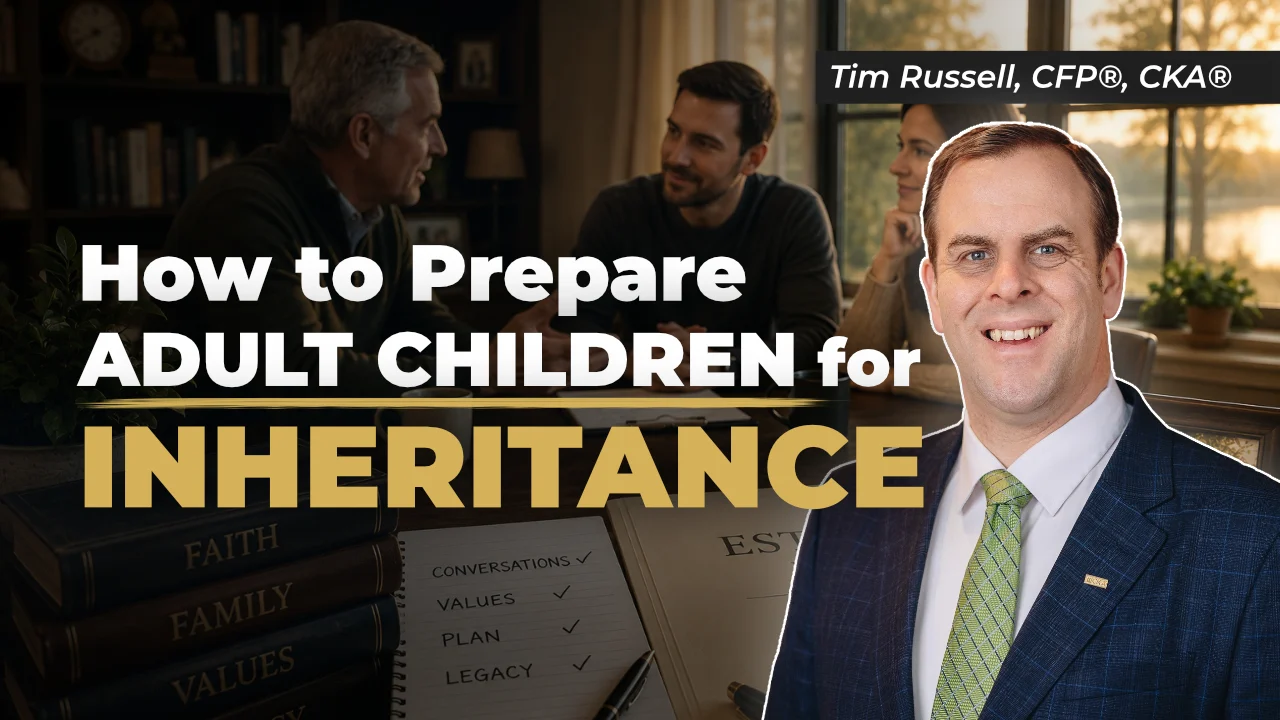
This article is the first in a four part series on what it means to leave more than money behind. Leaving an inheritance is not simply transferring wealth from one generation to the next. It is about leaving a stewardship legacy, one that passes down the skills to manage resources well, along with the resources themselves.
Two Warnings About Wealth
Before we get into practical steps, consider two quotes from Puritan writers of the 1600s and 1700s.
Thomas Brooks, author of Precious Remedies Against Satan’s Devices, wrote that adversity has slain her thousands, but prosperity has slain far more. In other words, hardship is difficult, and it tests our faith. But prosperity can be even more dangerous. Wealth has a way of working on the heart and mind in ways that hardship does not.
Cotton Mather made a similar point. He said that religion produced prosperity, and prosperity, in turn, destroyed the religion that created it.
These two ideas echo what the Apostle Paul teaches in 1 Timothy 6. He writes that the love of money is a root of many kinds of evil, and that some people, in their eagerness for it, have wandered from the faith and pierced themselves with many sorrows.
Money itself is not evil. God created it as something good. Scripture does not say money is the root of evil. It says the love of money is. That distinction matters. So the question worth asking is this. What are we doing to help the next generation love God more than money?

The Great Wealth Transfer
Here is a staggering statistic. By the year 2045, an estimated 84.4 trillion dollars will pass from the current generation of owners to the next. Many people call this the Great Wealth Transfer. It is the single largest transfer of wealth in recorded history.
This moment holds enormous potential for growth. It also carries real spiritual risk for beneficiaries who are not prepared to receive it well.
As stewards, we are called to manage our resources wisely, and that includes choosing wisely who will steward those resources after us. Take time to prayerfully consider your beneficiaries. Are they ready?
If the answer is no, the solution is not to disinherit them. The solution is to prepare them. This takes prayer, perseverance, and determination. The worst thing you can do is pass away, leave the money behind, and hope your children figure it out on their own.
What the Bible Says About Inheritance
Leaving an inheritance is a good thing. Proverbs 13:22 tells us that a good man leaves an inheritance to his children’s children.
But Scripture also calls us to pass down more than assets. Psalm 78 speaks of telling the next generation about the mighty works of God, so that they will place their hope in Him and keep His commandments. As parents, we carry the responsibility not just to hand down valuables, but to hand down values. That means sharing the stories of our lives and the story of God’s faithfulness.
Deuteronomy 6 reminds us to teach our children as we go through daily life at home. And in 1 Timothy 6, Paul instructs those who are rich not to place their hope in the uncertainty of wealth but in God, who richly provides all things for our enjoyment. Those with wealth are called to do good, to be rich in good works, and to be generous, storing up a firm foundation for the future.
That is the role we step into as parents. We shepherd the hearts and minds of our children toward loving and trusting God.
Wealth Reveals Character
Wealth has a way of bringing out what is already inside a person. It reveals character rather than creating it. That means we have a real opportunity, while our children are still under our influence, to help shape their character and their love for the Lord, all while entrusting the outcome to Him.
You do not have the power to control your child’s heart or to make them believe a certain way. What you can do is commit your children to the Lord, live a faithful and consistent life in front of them, and hold them up in prayer. At this stage, prayer may be the most important thing you can do for your child’s heart.
Remember that receiving wealth does not automatically make someone a good steward. So what should parents actually do?
What Parents Should Build Into Their Children
Focus on developing these areas in your children’s lives.
- Financial knowledge. Do they understand how to budget, save, and prepare for the future? Can they practice delayed gratification? These skills matter no matter the size of the inheritance.
- Work ethic. Do they know how to work hard and understand the value of a dollar?
- Contentment and generosity. Are they always chasing more, or are they generous with what they already have? You cannot force contentment or generosity, but you can model it, teach it, and pray for it.
- A biblical worldview. Are you giving them opportunities to grow and build their lives around one?
- Responsibility. This may be the most important trait of all. Teach your children to own their choices rather than shifting blame onto others, and to take responsibility for the results of their decisions.
The earlier you start building these habits, the more likely they are to stick.
A Way to Prepare: Give, Observe, Teach, Give Again!
Most people handle inheritance the same way. They spend a lifetime building wealth, transfer it all at death, and simply hope things work out. That approach leaves little room for guidance.
There is a better way. I like to call it the framework of give, observe, teach, give again.
Once you pass away, you lose the opportunity to counsel, encourage, and coach your children through decisions. But while you are alive, that opportunity still exists. Start giving your children financial responsibility now.
Give. One practical idea is a matching savings program. If your child contributes to a retirement account, match their contribution up to a set amount, such as 1,000 or 2,000 dollars. This builds the habits and mindset needed for long term financial health.
Observe. Watch how they handle it. Are they spending it on things that are frivolous or even harmful? Or are they paying down debt, building savings, and preparing for retirement? Look for signs of wisdom in how they manage what they have been given.
Teach. Use what you observe as a teaching moment. Talk with them about generosity, the power of compound interest, and the value of delaying gratification for something greater later.
Give again. As they grow in wisdom, give a bit more responsibility and repeat the cycle. Each round builds their stewardship ability for the day when they will one day receive it all.
The stakes here are high. The potential for good is high, and so is the potential for damage if this generation is not prepared. That is exactly why training your children now matters so much.
More Than a Transfer of Money
There is something more important than simply handing wealth to your children. You have both the opportunity and the responsibility to build a stewardship mindset and a stewardship heart in their lives.
This is what makes the Great Wealth Transfer meaningful for families who prepare well. Beneficiaries trained in stewardship can use their wealth for the glory of God. They can fund kingdom work, care for and establish their families, build businesses that change the world for good, and support evangelism, missions, and ministries.
There is so much good God wants to do through you and through your family. Trust Him. Pray for your children. And watch what He brings out of your faithfulness.
This is the first article in a four part series on preparing the next generation for inheritance. Stay tuned for the next installment.
Disclosures: The topics discussed in this podcast are for general information only, and are not intended to provide specific investment advice or recommendations. Investing and investment strategies involve risk, including the potential loss of principal. Past performance is not a guarantee of future results. All information here in is from sources believed reliable, but is not guaranteed for accuracy or completeness. The team assumes no liability for any errors, omissions or actions taken based on this material.
Information is as of the date stated and subject to change without notice. Securities and advisory services offered through Geneos Wealth Management management, FINRA/SIPC