~5 minute read
By Tim Russell, CFP®, CKA® (President & Wealth Manager) at Life Financial Group
Originally shared on the Life in the Markets podcast — 9/28/2026
Subscribe on Apple Podcasts or Spotify.
*Note: you will get the most out of this market update by watching the video above*
10-Year Treasury Hits 19-Year High: What It Means for Investors
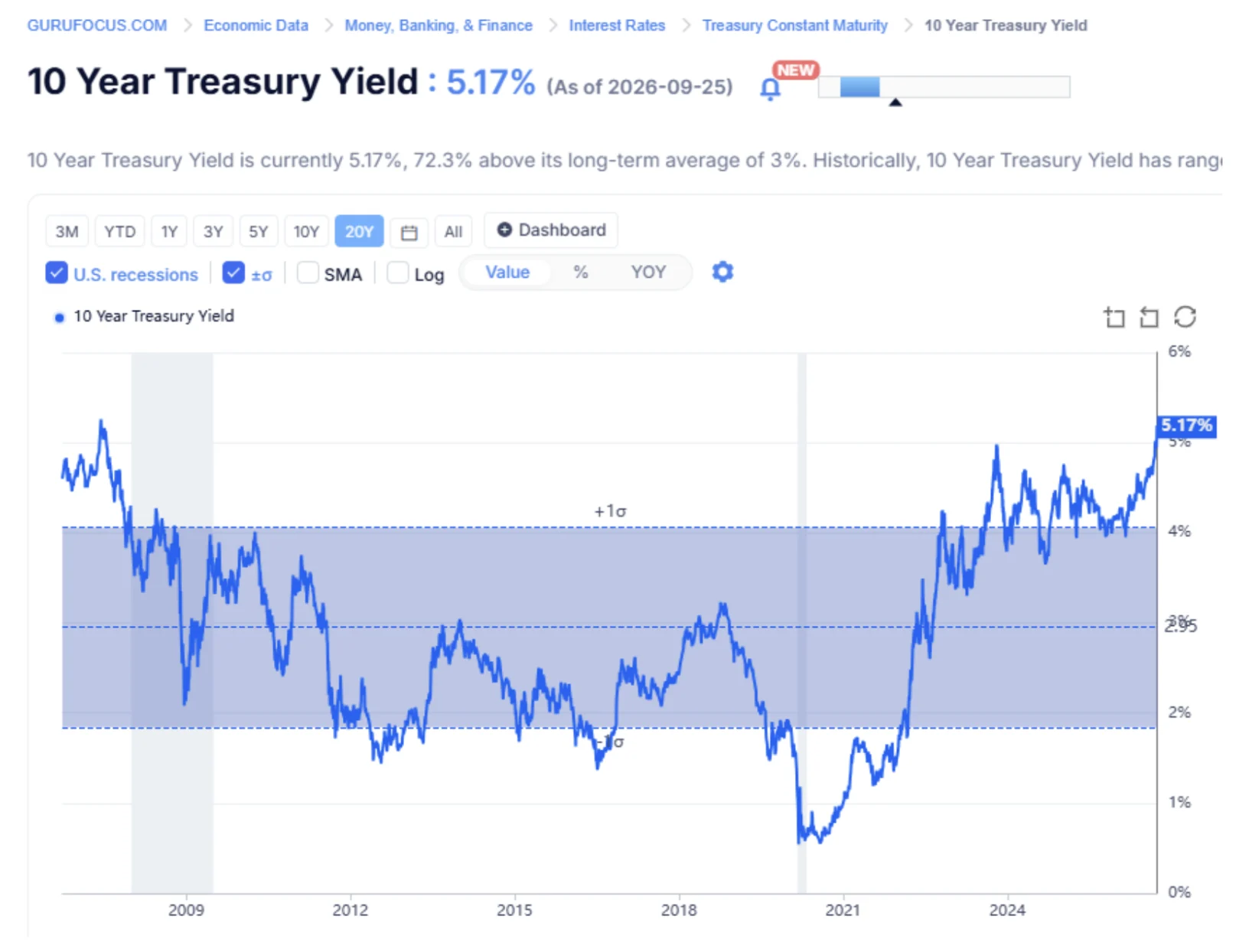
Last week, the 10-year Treasury yield climbed above 5.2%, its highest level since 2007, before the Great Financial Crisis of 2008–2009. It settled at 5.178% by Friday’s close.
Rising rates usually weigh on stocks, but most major indices still finished the week higher. Below, we break down what’s driving bond yields up, why the move isn’t as alarming as the headline suggests, and one area we’re watching closely: the cost of the AI buildout.
Weekly Market Recap
Despite rising interest rates, stocks held up well last week. The Nasdaq led the way, while small caps slipped slightly.
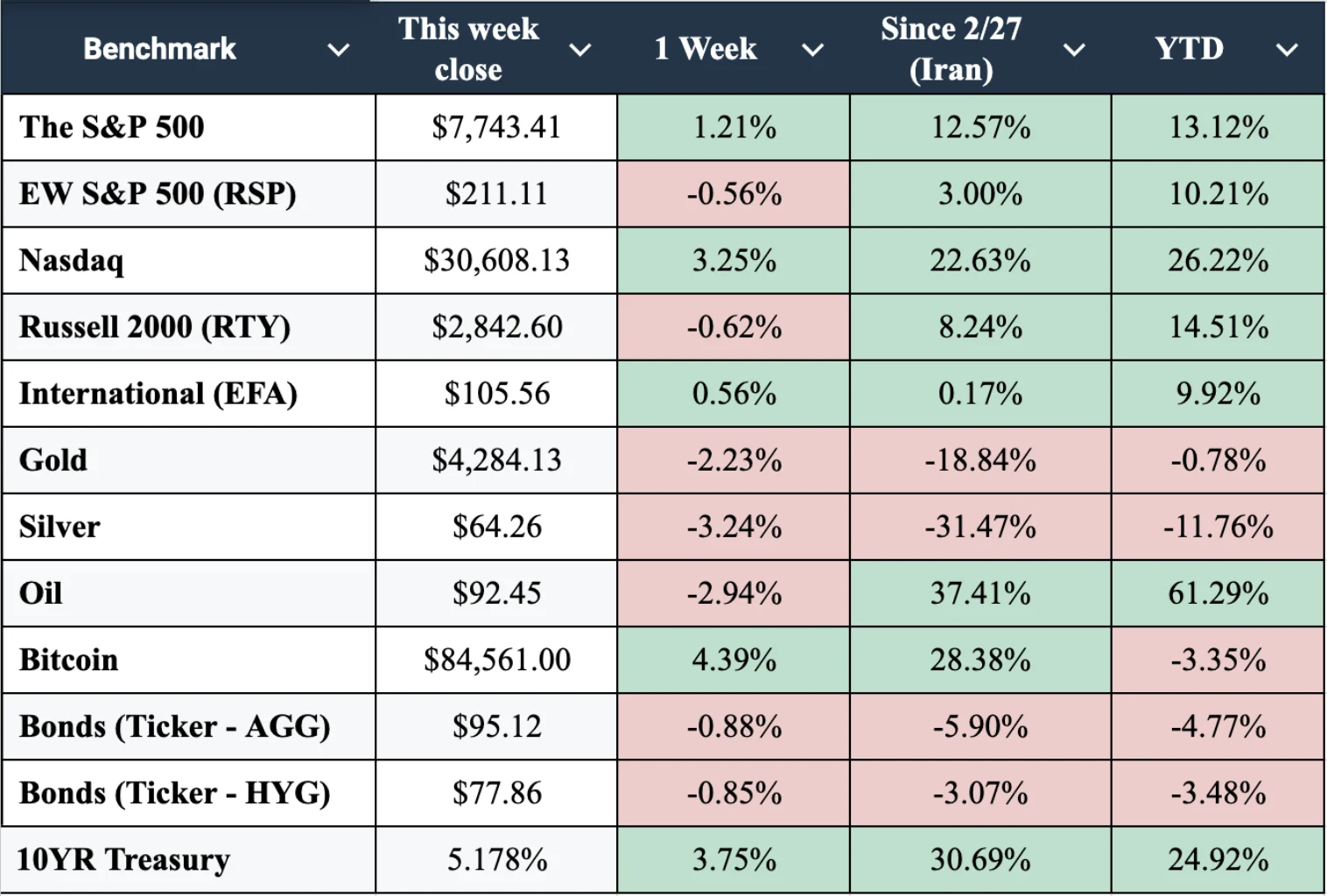
Outside of stocks, gold, silver and oil all traded lower, falling between roughly 2.25% and 3.25% for the week. Bitcoin moved higher. Bonds had a rough week across the board, with the 10-year Treasury yield briefly topping 5.2% before settling at 5.178%.
Why Are Bond Yields Rising?
Long-term bond yields moved higher for four main reasons.
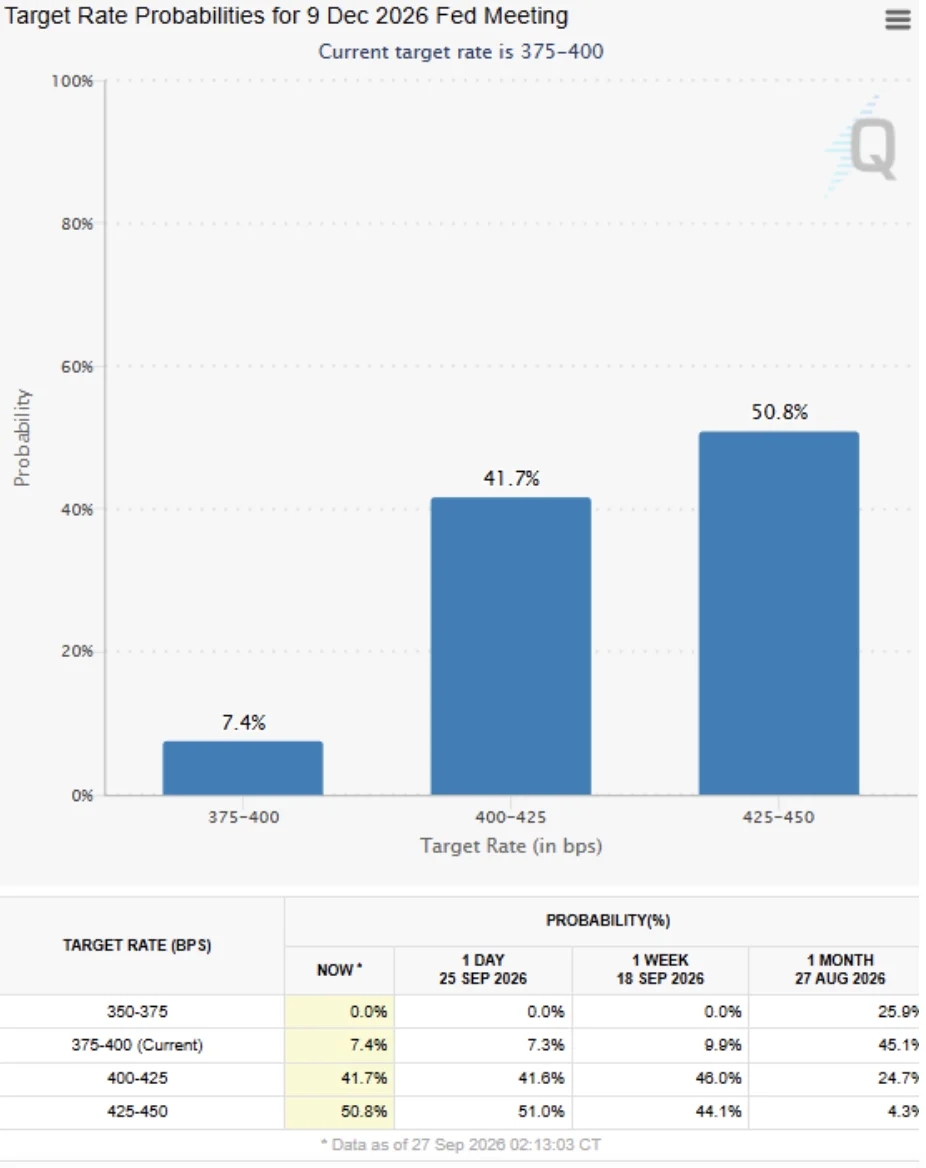
1. The Fed is still hiking. The Federal Reserve recently raised short-term interest rates, and two Fed presidents have since signaled that more hikes are likely. Markets now put roughly a 92% probability on one to two additional rate hikes before year-end.
2. The economy is running hot. The latest PMI report showed the economy continuing to grow at a healthy pace. This highlights a gap between how consumers feel and what the data shows. Consumer sentiment remains largely negative, but the actual economic numbers are much stronger. A heating economy, however, raises concerns about inflation.
3. Inflation is stuck, and oil is expensive. Crude oil started last week above $100 a barrel, and diesel fuel hit a new high of more than $6 a gallon.
4. Government borrowing remains high. Federal borrowing shows no sign of slowing, and heavy borrowing tends to push bond yields higher.
Putting the 19-Year High in Perspective
You have to go back to 2007 to find 10-year Treasury yields this high. That sounds alarming, but the long-term trend tells a different story.
Over the past 50 years, yields fell steadily from the 1970s until around 2020, when they bottomed out just above 0%. They’ve risen meaningfully since that low, but today’s levels are still within a reasonable long-term range.
Last 20 Years
Last 50 Years
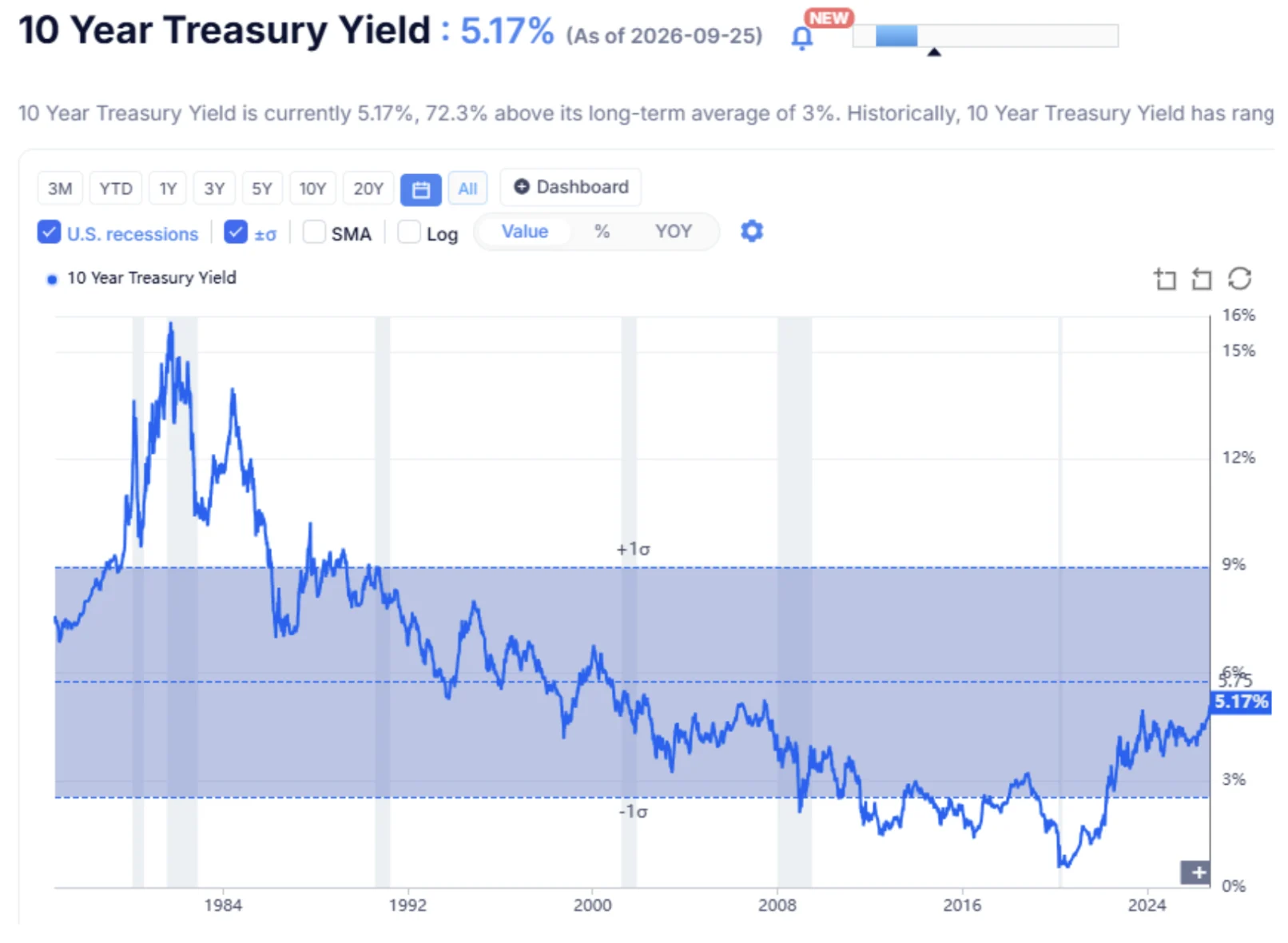
The current move may feel uncomfortable, but it isn’t outside historical norms and isn’t necessarily a reason for concern. What we’re watching is whether higher rates spread to other parts of the economy, especially business borrowing. If they did, some companies could struggle to repay their debt.
Are Companies and Consumers Still Paying Their Debts?
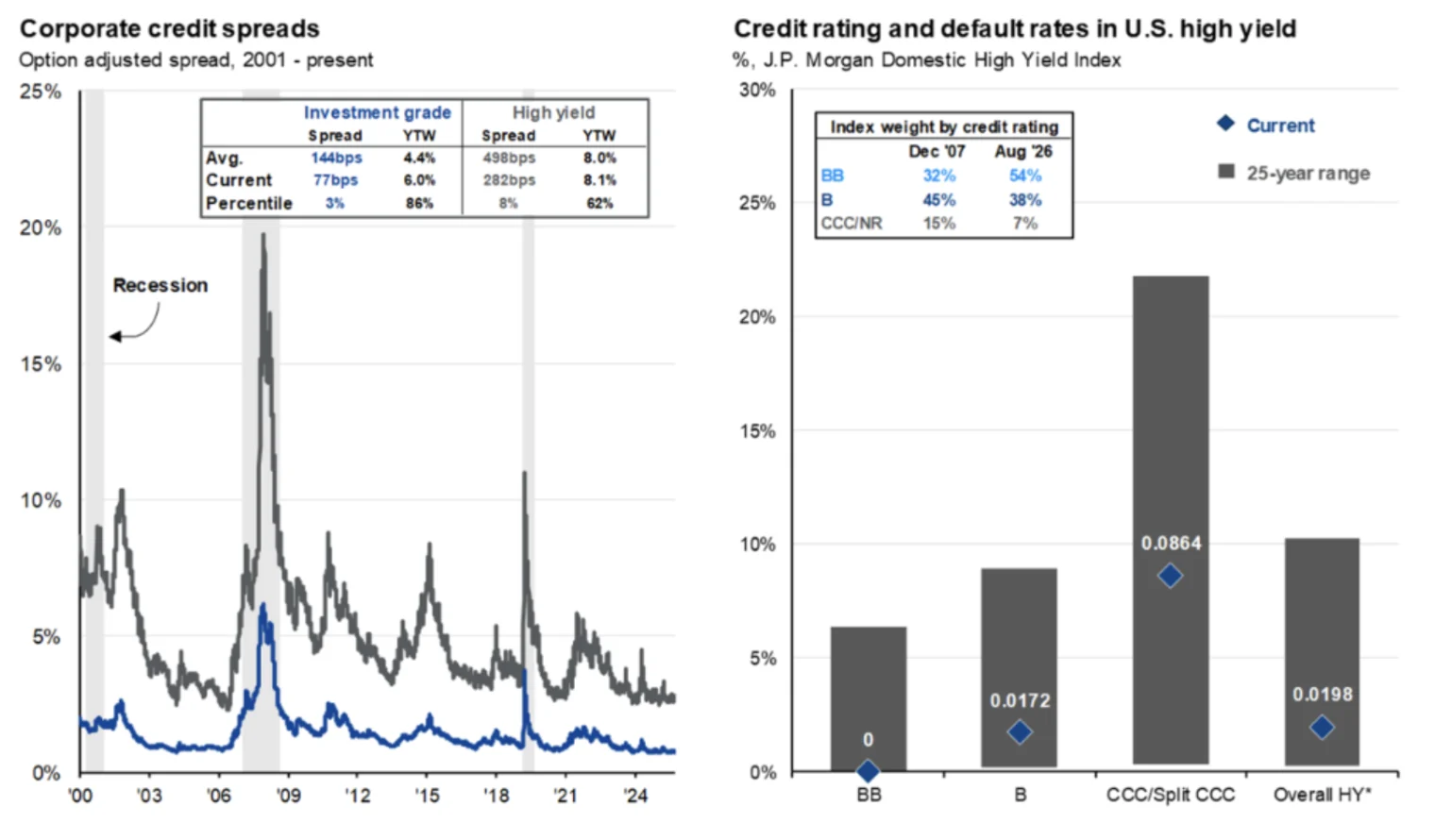
So far, yes. There are no significant concerns about corporations’ ability to repay their debt, and consumer repayments look healthy with no meaningful rise in delinquencies.
The one exception has been student loans. We noted a sharp jump in student loan delinquencies a couple of months ago. That rate remains elevated, but it has started to drift lower.
The chart below shows the 25-year range of default rates across different bond classes, with the blue diamond marking today’s rate. For quality bonds, defaults remain very low.
AI Spending and the Oracle Data Center Delay
J.P. Morgan’s Guide to the Markets includes a chart worth sharing. It tracks capital expenditures (capex) by five of the biggest AI spenders: Alphabet, Amazon, Meta, Microsoft and Oracle.
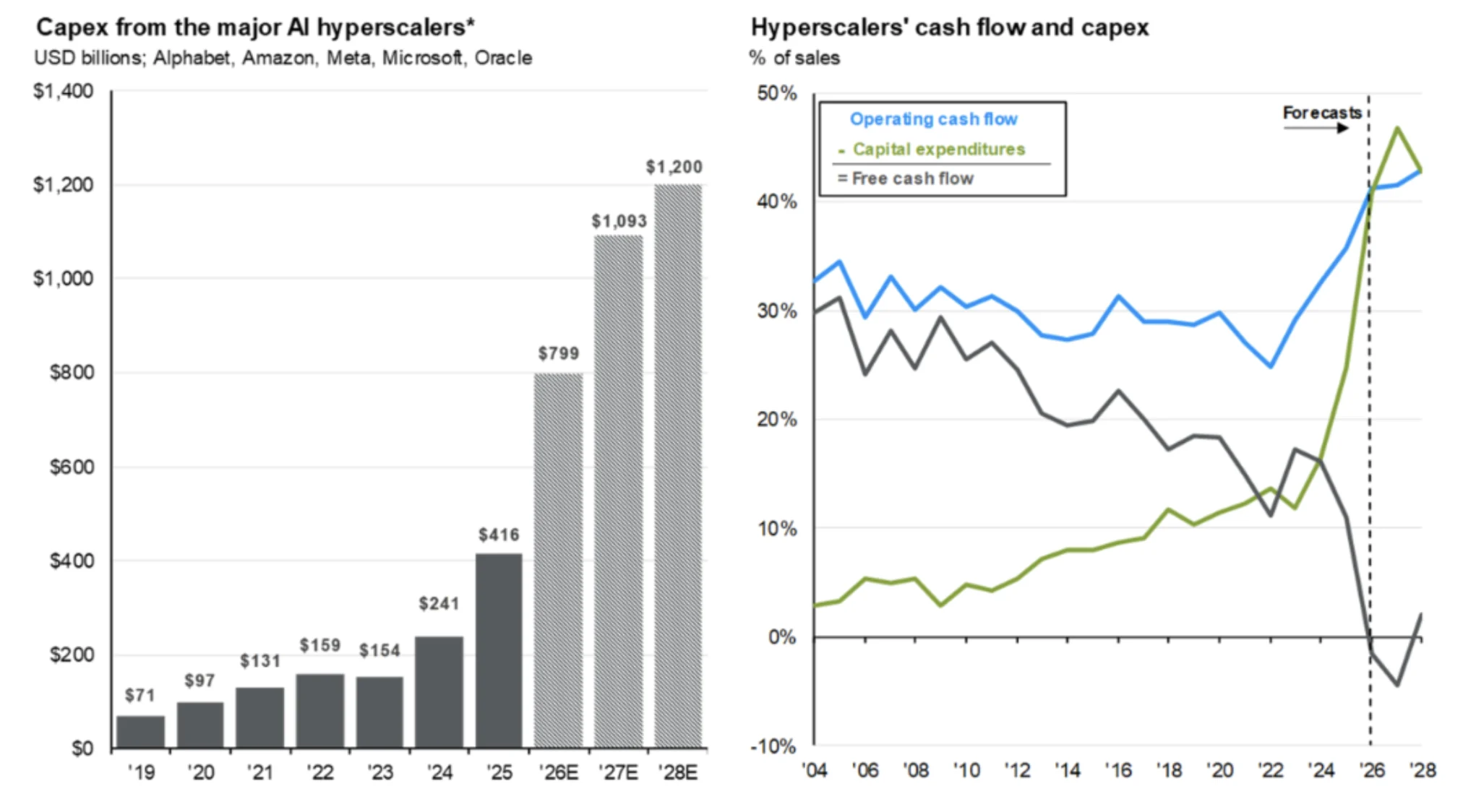
The dark gray bars show that AI capital spending has climbed steadily over the last couple of years. The light gray bars show projected spending. For 2026, capex is expected to nearly double, followed by growth of roughly 37% in 2027 and 15% in 2028.
Where is the money coming from?
So far, mostly from cash flow. Many of these companies are extremely profitable, and they’ve been funding their AI infrastructure with free cash flow, the money left over after covering expenses and debt payments.
The problem is that cash flow isn’t unlimited. Given their projected capex growth, these companies will likely need to take on debt to finance much of their future spending. That matters more when interest rates are rising.
A warning sign from New Mexico
Last week, Oracle reportedly sent a force majeure notice to the developer of Project Jupiter, a roughly 2.5-gigawatt Stargate AI data center campus in New Mexico built to supply computing power for OpenAI. A force majeure notice lets a company seek relief from contract terms when events outside its control get in the way.
The project has faced delays tied to a natural gas pipeline meant to power the site, along with local opposition and legal challenges. Oracle has said the project remains on schedule, but the notice would let it defer payments if the campus misses its planned 2028 opening.
This is troubling. Oracle is a major player in the AI race and has made enormous capital commitments. Its stock has struggled because those commitments look large relative to the company’s current revenue. Events like this make us pause and ask how the full AI buildout will ultimately be financed and delivered.
The Bottom Line for Investors
The 10-year Treasury hitting a 19-year high is a notable milestone, but it isn’t a reason to panic. Yields remain within their long-term historical range, the economy is growing, and corporate and consumer debt repayment looks healthy.
We’ll keep a close eye on two things: whether higher rates start to strain business borrowing, and how the largest tech companies finance their growing AI ambitions. As always, if you have questions about how rising rates affect your portfolio, reach out to your advisor.
Verse of the Week
Have questions about what this means for your own plan? Reach out to our team, we’re glad to talk it through.
Stay Connected
Have questions or topics you’d like us to cover in a future episode? Email us at contact@thelifegroup.org with “Life in the Markets” in the subject line.
✅ Like, comment, and subscribe on YouTube
🎧 Listen to the audio podcast wherever you get your shows
📘 Pick up a copy of The Good Steward to grow in your financial discipleship
Sources
- Reuters via CP24: Oracle triggers force majeure on data centre project
- DatacenterDynamics: Oracle issues force majeure notice to Blue Owl
- Techzine: Oracle seeks payment deferral if data center is not operational by 2028
Disclaimer: The topics discussed here are for informational purposes only and do not constitute specific investment advice. Investing involves risks, including potential loss of principal. Past performance does not guarantee future results. Securities and advisory services offered through Geneos Wealth Management, member FINRA/SIPC.