Written by Stephen Rohrer, Wealth Manager
(This is Part III of a four-part series. We recommend starting with Leaving Firm Foundations Part I: Don’t Leave Holes)
As we examine being good stewards and building a foundation for our sons and daughters, there are three components: Opportunity (both the liberty and space), Resources (both material and intellectual), and Wisdom (to know how to use resources and opportunity and how to create more of both). Let us explore the vital role resources can play.
Money:
Money is, of course, the first thing we think of when we hear the word “resource.” It is an immensely useful and powerful tool, but a terrible and unrelenting master. To make money your god is tempting because he promises you the world and all it contains. Jesus warns us “No one can serve two masters. Either you will hate the one and love the other, or you will be devoted to the one and despise the other. You cannot serve both God and money.” (Matt. 6:24). Do not make money your pursuit, but rather ambitiously pursue God and His wisdom. Center your goals around things that God says matters. Then money and similar material possessions like property often come as a blessed by-product of wise and diligent actions. For “By wisdom a house is built, and through understanding it is established: through knowledge its rooms are filled with rare and beautiful treasures.” (Prov. 24:3-4). And then with wisdom, we can deploy those material resources shrewdly and boldly in righteous causes and teach our children to do the same.
Tools:
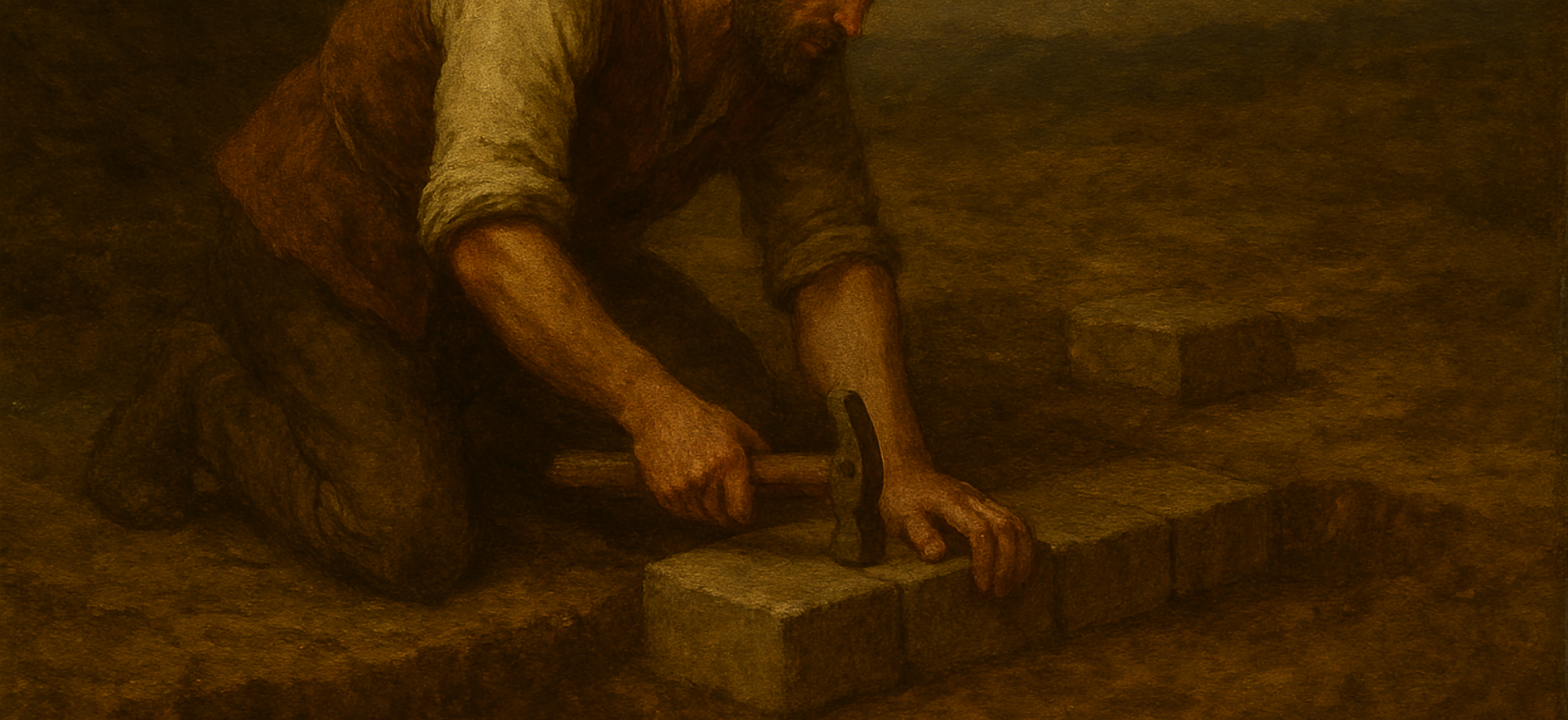
Resources – helpful resources – are far more than money however. Cash is easy to throw around, but just throwing cash by itself usually hurts people. Think more broadly. Throughout history most fathers passed on the tools of their trade to their sons. From the stonemason’s chisel to the sword of a knight, this could take countless forms. But they passed on durable tools and the training on how to use them. On his farm, my grandfather purchased a massive John Deere tractor in the 1940s. Eighty years later it still runs and there’s nothing like it. My uncle and dad would fire it up and go thundering out to the back forty with me riding the tongue of the hitch. Between planned obsolescence and advertising fueling a desire to have the latest gadget, such a durable workhorse is unlikely to be made or passed on today. But we ought to build lasting things, invest in them, and teach our children how to master their use.
Intellectual Resources:
Even if our highly specialized career can’t be easily passed on to our children, we can still pass on great intellectual resources. There is wisdom to be found in each profession. If we take the time to tell them our thought processes, productivity habits, and experiences, they will learn a great deal about the world. When you consider the value of professional mentors or coaches for your own career, think of how much free value you can provide to your children by being not just sport coaches, but professional coaches to them. This is exactly what King Solomon was doing when he wrote Proverbs; he was training his sons, the princes, in how to be good king.
There is also an underrated but significant benefit to bringing your children into your business thought processes: they may surprise you with their insight as well! We should grow in wisdom as we age, but often our minds get set into fixed or overly complex tracks and a child can provide a refreshingly simple perspective that cuts to the quick.
Intellectual resources also include how to manage finances, be a diligent worker, and what it means to be an upstanding citizen. Most Americans have a dreadful degree of consumer debt. This is, however, a new problem. For many generations, fathers and mothers taught their children to spend less than they make. Clearly, we have not continued to teach this. Fortunately, we have access to a wealth of resources to teach ourselves how to be wise stewards with what God has blessed us.
Work Ethic Resources:
As for being a diligent worker, few of us know how to get our hands dirty. In Jim Collin’s book Good to Great, he tells how Nucor Steel revolutionized American steel production by hiring farmers who knew how to do hard, dirty work. No man should be a stranger to callouses and sweat. Hard physical work is what we were made to do, and we men thrive in it. Studies have shown that chopping wood with an axe increases testosterone production by 48% (see link below). This is more than what is produced from playing some competitive sports. It’s no surprise then that Solomon says, “The hand of the diligent will rule.” (Prov. 12:24). Women and children also benefit from getting their hands in the dirt. Gardening is wonderfully therapeutic in our age of endless screentime. It also supplies our kitchens and tables with delicious herbs, flowers, and produce. These in turn add health, flavor, and beauty to our lives.
Cultural Resources:
As for what it means to be an upstanding citizen, clearly our society at large doesn’t know. There are many ways to be considerate of those around you: picking up trash at an event, leaving things in a better condition than how you found it, putting effort into improving your street or neighborhood, and acting responsibly in public—among countless others. As Rule No. 1 in George Washington’s 110 Rules for Civility & Decent Behaviour put it, “Every action done in company ought to be with some sign of respect to those that are present.” Far too many people display zero respect for any surrounding. Whether it is parents flying into a rage at their child’s basketball game or people wearing pajamas to the ballet, we have lost sight that every action we do in public can show disregard and contempt for a neighbor, or it can show that we respect them and the occasion. Our children learn this from our example—we should set a pattern from an early age that they can follow. Expressly explaining why we act with respect is also important; it is the practical living out of the Christ’s command that we call the Golden Rule: “Love your neighbor as yourself.” (Galatians 5:14b).
A Good Name:
Last, but not least, there is a tremendously valuable resource that is often forgotten: the resource of a good family name. At times past, men fought duels and died for the sake of their family’s good name. While we should not take it to that extreme, it would be well for us to remember how significant a good, honorable reputation is for our children and relatives. Proverbs 22:1 tells us plainly that “a good name is to be chosen rather than great riches, and favor is better than silver or gold.” This is more important and valuable than all that money can buy – because it cannot be bought.
In Summary:
We must strive to steward well and leave our children a rich inheritance of resources in all their fullness, from money to manners, and from tools to trades. It would be a folly for each generation to have to start at square one. If we are to build cathedrals again, our children must build upon our work as we build on the work of our fathers. We must work honorably so that generations after us will find open doors because of the reputation of our integrity.
In Part IV, we will examine an essential foundation stone without which everything else may be wasted. This keystone is Wisdom.
All Scripture quotations are from the English Standard Version (ESV) unless otherwise noted.
(This article has been modified by the author from the original form on his blog at EnterpriseonPurpose.com)