~5 minute read
By Tim Russell, CFP®, CKA® (President & Wealth Manager), and Stephen Rohrer, CES™ (Wealth Manager) at Life Financial Group
Originally shared on the Life in the Markets podcast — 8/17/2026
Subscribe on Apple Podcasts or Spotify.
*Note: you will get the most out of this market update by watching the video above*
The Big Picture: Markets Are Robust
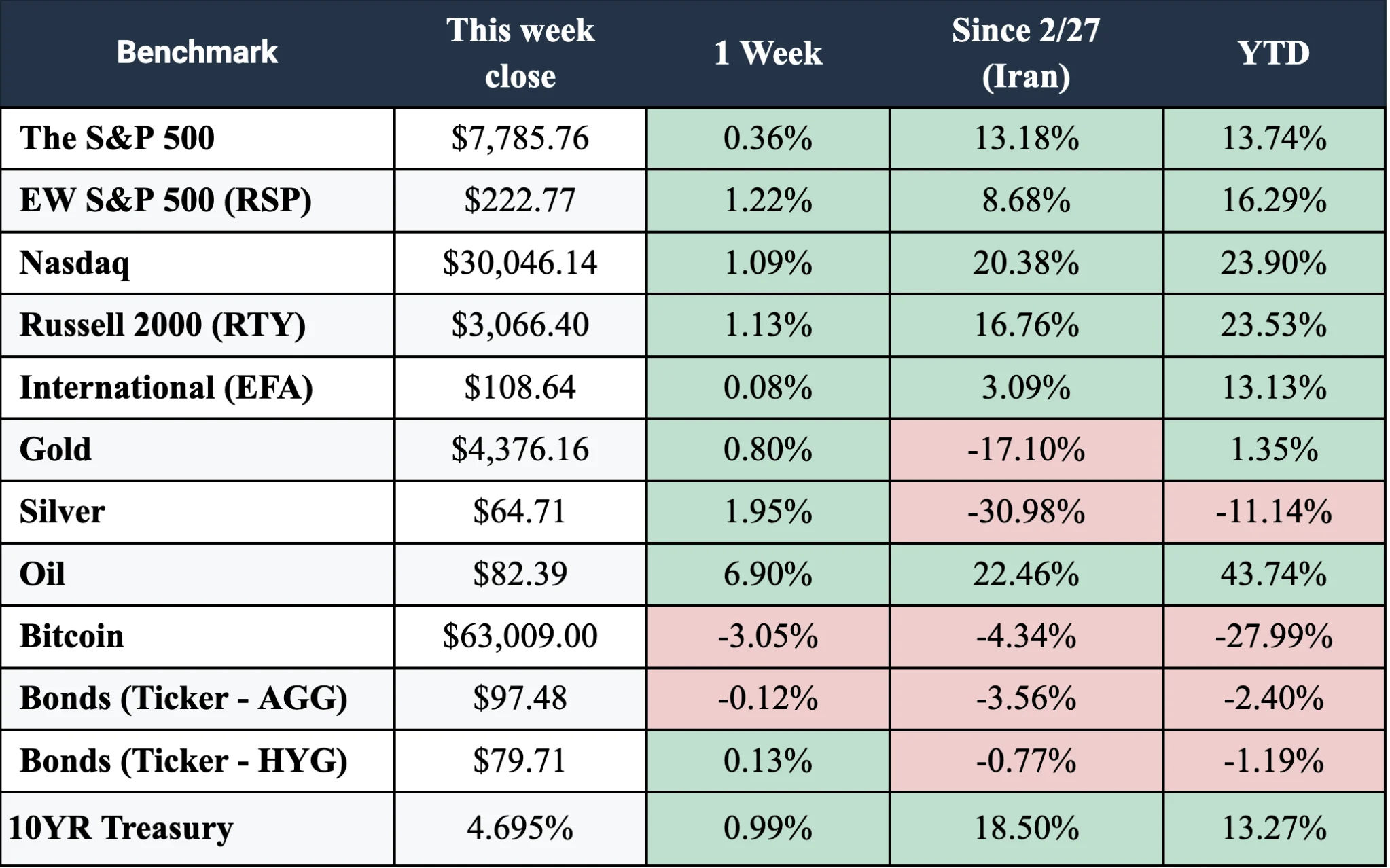
Long story short: almost everything looked positive and encouraging last week, with just a couple of notable exceptions.
- S&P 500: Largely flat on the week, but still up about 13.75% year to date.
- Equal-weighted S&P 500: Up 1.2% for the week, continuing to outperform the large-cap giants. That’s a strong, healthy signal.
- Nasdaq: Up 1% for the week, just shy of 24% for the year.
- Russell 2000: The most unloved index of the last few years is finally showing real signs of life, running neck-and-neck with the Nasdaq year to date. These are smaller and mid-cap companies nobody’s been excited about…until now.
- International markets: Flat for the week, up 13% for the year.
Here’s why this matters: for the last two or three years, market gains were basically carried by a handful of mega-cap names. This year looks different. Most things are doing well, not just the usual suspects, and that broader participation is a genuinely good sign for the health of the market.
As for the doom-and-gloom predictions about AI bringing about the end of the stock market? The markets don’t care about anyone’s opinions… ours included. They’re doing what they’re going to do, and honestly, they’ve been doing better than we expected this year. We’re grateful for it.
Inflation: Why 3.4% Doesn’t Feel Like 3.4%
This week’s big data point was the Consumer Price Index (CPI), the standard measure of how fast prices are rising. The headline number: prices are up 3.4% over the last year.
If your gut reaction is “that doesn’t seem right,” you’re not alone. Most of us feel like inflation has been far wilder than that over the last few years. Here’s the thing, though, that feeling is actually picking up on something real. It’s just not about this one number.
Prices have gone up a lot since Covid. Food, housing, you name it. The reason 3.4% still feels like a gut punch is that it’s stacking on top of several years of much higher increases. Remember, we had a year with inflation near 9-10%. Those increases compound and bake in over time, so even a “modest” 3.4% on top of it all still stings.
Breaking down the CPI report:
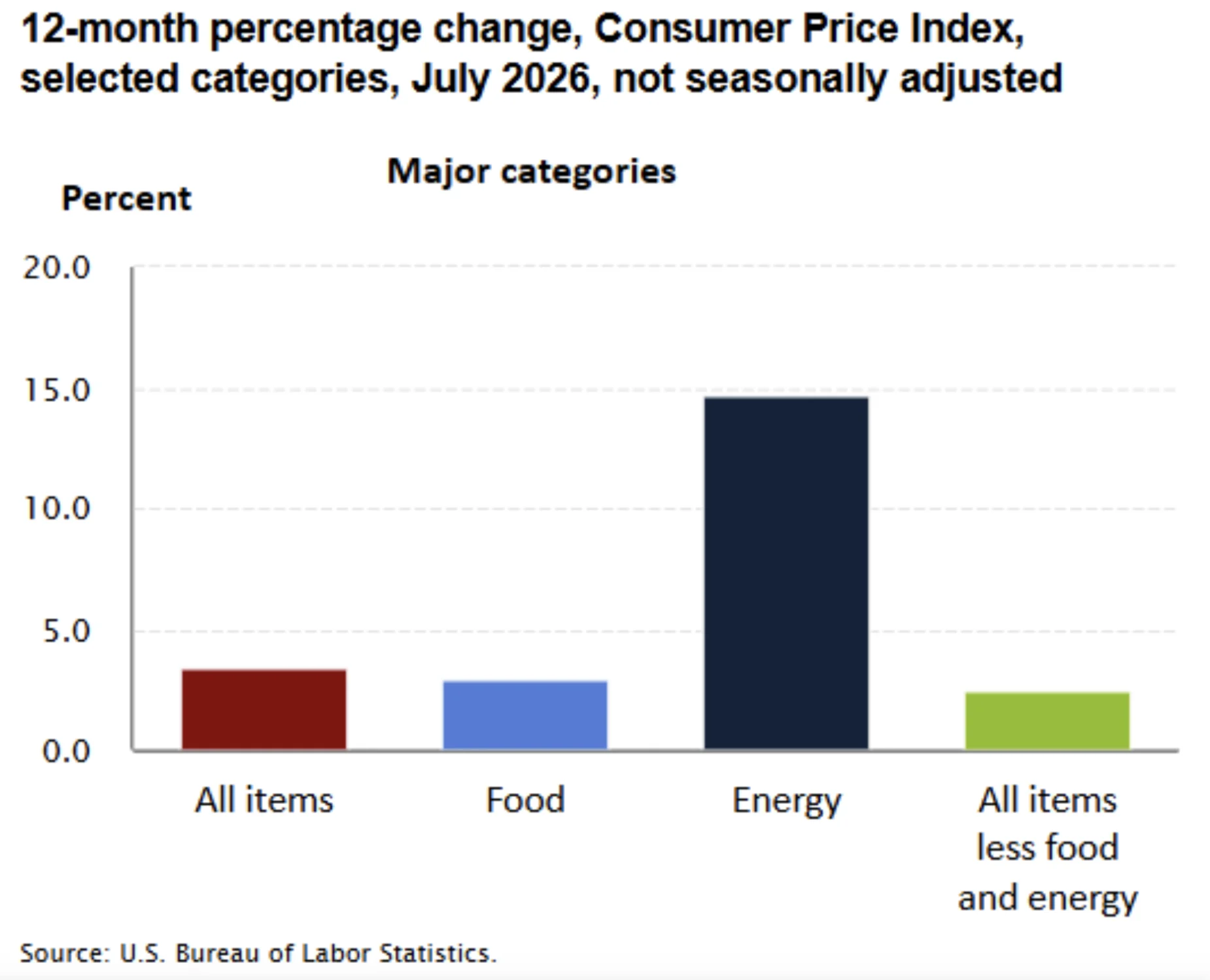
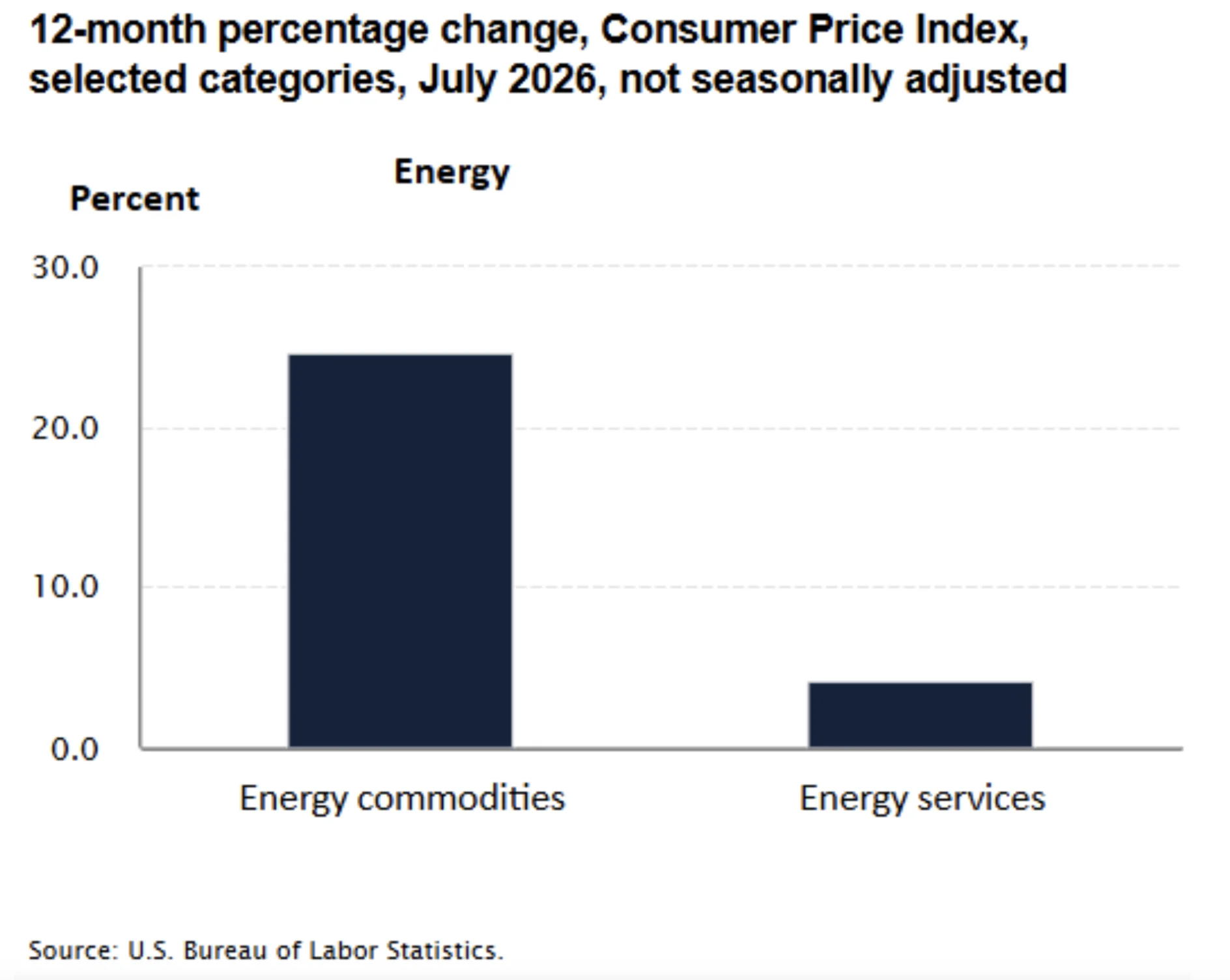
So, technically, if you stop driving and stop eating, you’ll be just fine. (We’re kidding — mostly.) The real takeaway is that the cost of living isn’t cheap, and that’s exactly why investing in equities remains important: it’s one of the best tools you have to keep pace with inflation over time.
Employment: A Mixed Bag
Unemployment just crossed into record territory, at or under 4.5% for a stretch we haven’t seen since 1972. Impressive on the surface, but the less encouraging reason behind it is that people are leaving the workforce, not that a flood of new jobs are being created.
That said, there are real signs the tide may be turning:
- The NFIB Small Business Optimism Index jumped from 97.4 to 99.8 in July, its highest level since last August.
- Small business hiring plans rose nine points month-over-month, and current job openings rose four points.
Anecdotally, plenty of business owners we’ve talked with are genuinely encouraged about their own growth, in spite of ongoing headwinds. One anecdote doesn’t make a trend, but it lines up with what the data is starting to show, and some of last year’s tax changes aimed at helping small businesses with capital investment may finally be showing their lagging effects.
Housing and the Widening Gap
Existing home sales remain near 30-year lows, with only 4.06 million annualized sales in July. So we dug into the 30-year comparison to understand why.
- Today: Median home price is $410,000; median household income is about $83,000 (roughly 5x income).
- 1996: Median home price was $114,000 (about $250,000 in today’s dollars); median household income was $35,000 (about $71,000 in today’s dollars), roughly 3.5x income.
That’s a 42% increase in home price relative to income over the last 30 years. Combine that with today’s higher interest rates, and it’s no surprise sales are stalled. The one silver lining: most current homeowners locked in ultra-low rates during Covid and simply don’t need to sell, so the market is stalling rather than cracking.
Bankruptcies: A K-Shaped Recovery in the Data
Digging into bankruptcy filings revealed something worth watching. Lending standards remain healthy overall, but delinquencies are creeping up. 90-day delinquencies on credit cards and auto loans are both rising. Interestingly, student loan delinquencies are actually falling, which is a genuinely good sign.
Delinquencies are a leading indicator of bankruptcies, and we’re seeing a sharp rise in both Chapter 7 and Chapter 11 filings (consumer and business) over the last six months.
This paints a picture of a K-shaped recovery: those with strong income are thriving, while those on the lower end of the income spectrum are getting squeezed by the rising cost of living, burning through cash, and taking on more debt they can’t sustain.
On the business side, it’s a different but related story. Many businesses took on cheap debt during the Covid-era low-rate environment, often on loans that need to be refinanced (recast) every five years. Now they’re refinancing into a much higher-rate environment while also facing softer consumer demand, a tough combination that’s pushing more businesses toward bankruptcy.
The best defense against becoming a bankruptcy statistic? Operate on margin. That means:
- Live on less than you earn.
- Build forced savings. Save before you spend, not after.
- Keep adequate cash reserves.
- Be cautious about borrowing, and avoid getting over-extended.
Worth noting too: the University of Michigan’s latest consumer confidence data shows a strange contradiction. Consumers say they’re worried their income won’t keep pace with inflation, yet their actual spending shows no sign of slowing down. People are spending like there’s no tomorrow while telling surveyors they’re anxious about tomorrow. That gap between sentiment and behavior is worth watching closely.
What to Watch This Week
- Retail earnings: Major retailers, including Walmart, Target, and Home Depot, report Q2 earnings this week, giving us a good read on the health of the average consumer.
- FOMC minutes: The Federal Open Market Committee releases its July meeting minutes this Wednesday, offering insight into how they’re thinking about interest rates.
On the Horizon: A Wave of Big IPOs
A few headlines are worth flagging for the months ahead:
- Reddit announced Friday it’s pursuing an IPO, with shares climbing back after an initial dip.
- Anthropic (the company behind Claude) is preparing to go public in October, alongside OpenAI (the company behind ChatGPT). If valuations hold, Anthropic could take the record for the largest IPO valuation of 2026 at roughly $2 trillion.
Each of these companies is expected to command an IPO north of $1 trillion. This is a striking sign of just how much appetite there is for AI right now. Historically, a wave of major IPOs can be a signal that a market is nearing a top, though that’s an observation, not a prediction. We still believe this market, especially on the strength of AI, has room to run.
Verse of the Week
“Wealth gained hastily will dwindle, but whoever gathers little by little will increase it.” — Proverbs 13:11
Slow and steady wins the race. You don’t need to win the lottery, or rob a bank to build wealth. Be patient, be methodical, and keep doing what God has set before you. He who is faithful in little will be faithful in much.
The topics discussed in this post are for general information only and are not intended to provide specific investment advice or recommendations. Investing and investment strategies involve risk, including the potential loss of principal. Past performance is not a guarantee of future results. All information herein is from sources believed reliable but is not guaranteed for accuracy or completeness. The team assumes no liability for any errors, omissions, or actions taken based on this material. Information is as of the date stated and subject to change without notice. Securities and advisory services offered through Genius Wealth Management, member FINRA and SIPC.
Stay Connected
Have questions or topics you’d like us to cover in a future episode? Email us at contact@thelifegroup.org with “Life in the Markets” in the subject line.
✅ Like, comment, and subscribe on YouTube
🎧 Listen to the audio podcast wherever you get your shows
📘 Pick up a copy of The Good Steward to grow in your financial discipleship

Disclaimer: The topics discussed here are for informational purposes only and do not constitute specific investment advice. Investing involves risks, including potential loss of principal. Past performance does not guarantee future results. Securities and advisory services offered through Geneos Wealth Management, member FINRA/SIPC.