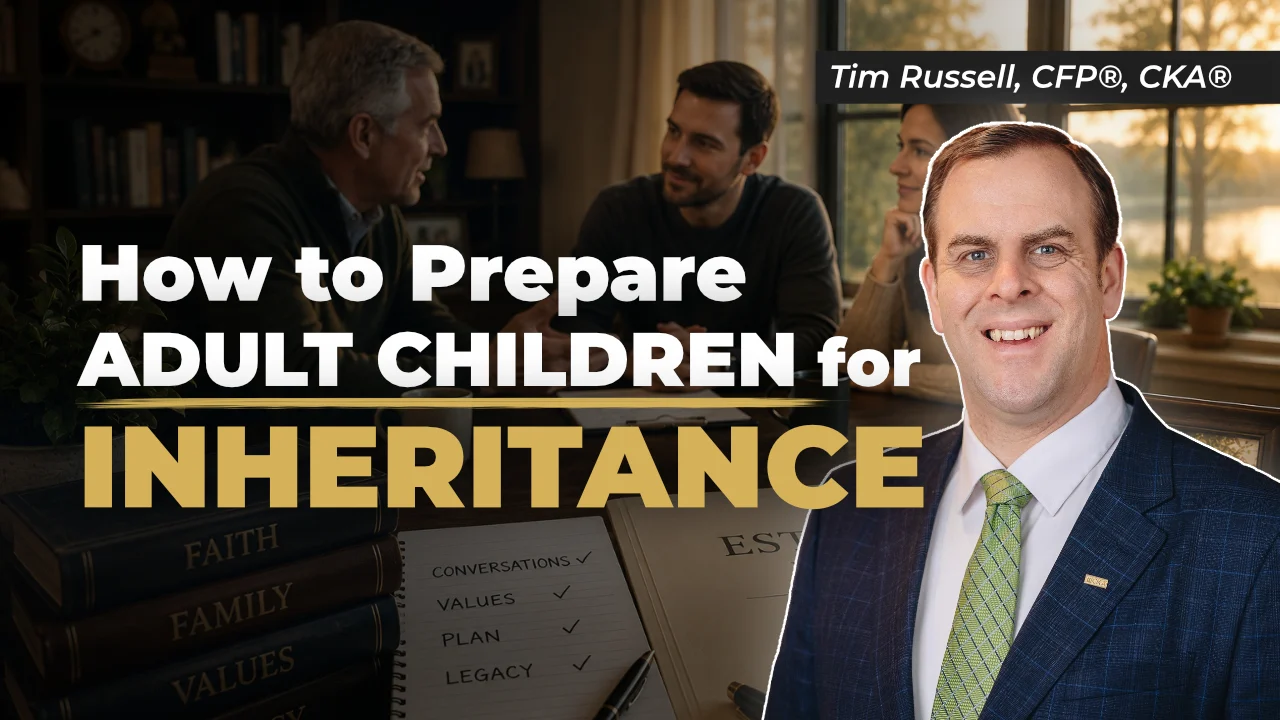
A recent report by Cerulli Associates anticipates that nearly $124 trillion of wealth will transfer by 2048. Some are calling this the “great wealth transfer” (GWT). This scenario poses some interesting challenges for the stewards of this wealth, both current and future. How each group handles this transfer will have profound impacts on society and families. Will the world be better or worse because of the GWT? What do the current and future stewards of this wealth need to understand and do to make the most of the wealth handoff?
Advice for Current Wealth Stewards
First, if you are married, the non-financial spouse must be comfortable and knowledgeable enough to take over the financial responsibilities at the death or incapacity of the financially oriented spouse. For this reason, it is wise and loving to start working with trusted financial professionals who can assist with the continuity of the financial plan. It’s also important to organize and list all the important account-related information. For example, list the name of the financial institution or bank, the rough dollar value of the account, the contact person, and other relevant transaction-related information (such as, “annual RMD,” “$500/mo income,” and so on).
Second, you are the steward of your assets, not your children or other advisors. Be wary of financial leeches. Don’t let them guilt-trip or manipulate you into unwisely using your wealth. No is an acceptable answer. Trust your gut. If something feels off then don’t go along with it. It may become appropriate to run items by a trusted family member or advisor to help sniff out the leeches.
Third, don’t be a miser, hoarding wealth for no reason other than leaving a large inheritance. For those with more wealth than they will ever need, it’s ok to give and spend more today on the things/causes that matter most to you.
Fourth, invest in sharing your values (not just your valuables) with your heirs. One of the saddest things I see as a financial advisor is for children who do not understand or share their parent’s values to spend their inheritance on wasteful pursuits. Here are some ideas to help pass along your values to your heirs:
- Hold a family meeting: discuss the meaning and purpose of wealth. How did you get this wealth? What sacrifices were made, and risks taken? What prayers were answered or miracles happened? It may be wise to draft a document to share some of these lessons with your family.
- Host a Journey of Generosity (commonly called a JOG) for your family. JOGs are appropriate for everyone, even for family members who are non-Christians. The gentle, nonjudgmental environment allows each participant to develop their understanding of their role in generosity. If you have never been to a JOG, I highly encourage you to do so. It may be wise to do the JOG in connection to a family trip or other special event that people are more likely to attend.
Fifth, update your estate plan. If you have not created a Last Will and Testament, now would be a great time to do so. If your Will is outdated, meaning some of the key roles are no longer appropriate or your bequest desires have changed, it would be very wise to meet with an attorney to get them updated. While on the topic of estate plans, it would also be wise to discuss your estate plan with your heirs before you pass. Your children can’t ask questions of you after you pass.
In our work with many Christian investors, we encourage the use of a “Christian’s Will,” which incorporates a statement of faith in Jesus Christ, a summary of your salvation story, and a challenge to your heirs to wisely steward the assets entrusted to them. This is often done through the use of a preface or preamble to the Will. Furthermore, consider other sections of the Will from a Christian perspective, including but not limited to charitable giving and Christian education for children.
Finally, include your children (or a child) in meetings with your financial advisor(s), accountants, and attorney. This helps them better understand what you already have in place. It also gives them contacts with key professionals who can help when they need to take over the stewardship responsibility.
Advice for Future Wealth Stewards
Luke 16:10 explains why it’s important to learn to be a good steward today. “One who is faithful in a very little is also faithful in much, and one who is dishonest in a very little is also dishonest in much” (ESV). If we hope to be entrusted by our parents or by God with wealth, we need to learn to be faithful with our limited resources today. Here are several steps to help develop habits of good stewardship.
First, get your financial house in order. Don’t rely on a bailout from parents or relatives. This looks like paying your bills on time every time, paying off and avoiding consumer debt, living on a budget, and being generous. Being a good steward can be summed up as follows, “live on less than you earn” and “don’t spend money that you do not have.” If maintaining financial discipline is difficult today, it won’t get better with more money.
Second, don’t count your chickens before they hatch. Plan as if no inheritance is coming. Anything could happen. Nursing Homes could consume a significant sum of the inheritance. It could be spent, stolen, donated, or redirected to others. At the end of the day, you are the only one responsible for meeting your needs.
Third, define your purpose of wealth. What do you hope or expect your wealth to accomplish? How do you want to use your wealth? What do you want to accomplish for your family, yourself, and the world? Spend time thinking/praying about these questions. Talk with wise and trusted relations who can help give you perspective. Read books like my book, The Good Steward, to better understand God’s thinking on this topic.
Fourth, don’t let wealth change you. Talk with your spouse about the likely draws that money may have on your heart. Consider the words of Jesus in his explanation of the parable of the seeds in Mark 4:19, “but the cares of the world and the deceitfulness of riches and the desires for other things enter in and choke the word, and it proves unfruitful” (ESV).
Finally, learn contentment by setting a financial finish line. Those who can’t be content with what they have will never be content with more. How much is enough for you? Consider setting a finish line for your annual income (adjusted annually for life changes and inflation). Anything earned above a certain amount can be allocated towards generosity.
Conclusion
As stewards, we are called to be faithful. If you would like to learn more about becoming an even better steward of all your wealth, check out the following resources:
- Book: The Good Steward – https://www.thelifegroup.org/thegoodsteward/
- Stewardology Podcast – https://stewardologypodcast.com/
- Life Institute – Church-Based Stewardship Seminars https://www.lifeinstitute.org/
- The Life Financial Group – Wealth Management from a Biblical Worldview https://www.thelifegroup.org/
Securities & Advisory services offered through Geneos Wealth Management, Inc. Member FINRA & SIPC.