~5 minute read
By Stephen Rohrer (Wealth Manager) at Life Financial Group
Originally shared on the Life in the Markets podcast — 5/18/2026
Subscribe on Apple Podcasts or Spotify.
*Note: you will get the most out of this market update by watching the video above*
Market Update for May 18, 2026
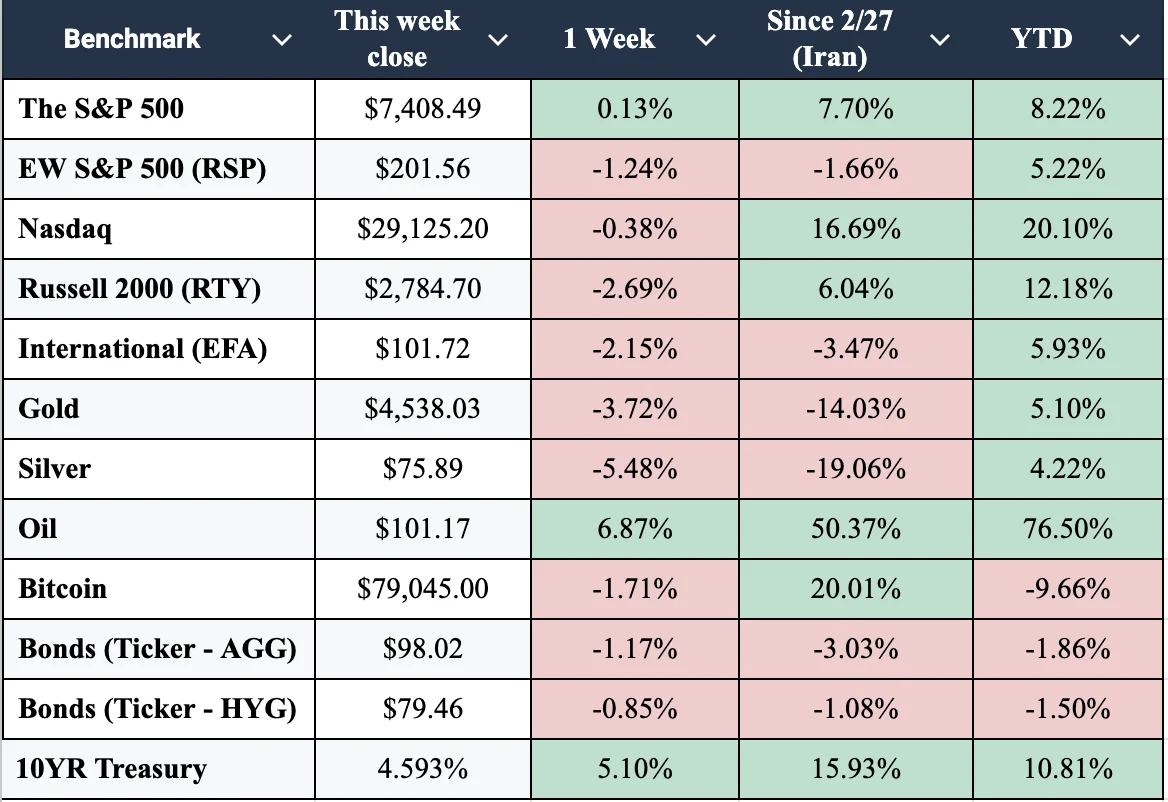
Inflation Concerns Return as Oil Prices and Treasury Yields Rise
U.S. stocks recently posted their weakest session since March as oil prices and Treasury yields climbed amid renewed inflation concerns, key economic data releases, and an upcoming Federal Reserve leadership transition. Despite the recent pullback, the S&P 500 still managed to finish slightly positive overall, and most major indexes remain solidly positive year to date.
While the stock market has held up relatively well, the bond market tells a different story. Bond prices have declined, which means Treasury yields, particularly the 10-year Treasury yield, have moved higher. This reflects growing expectations that the Federal Reserve may not cut interest rates again this year.
One of the primary drivers behind this shift is persistent inflation, much of which continues to be influenced by elevated oil prices.
Oil Prices Continue to Pressure Inflation
Oil prices remain elevated as tensions involving Iran continue. As we’ve mentioned before, the longer oil stays above $100 per barrel, the more likely it is to create broader economic consequences over time.
We are beginning to see some of those effects appear in inflation data.
The latest Consumer Price Index (CPI) report showed that the cost of all goods, including food and fuel, increased 3.8% year over year. Core inflation, which excludes food and energy, rose 2.8% year over year.
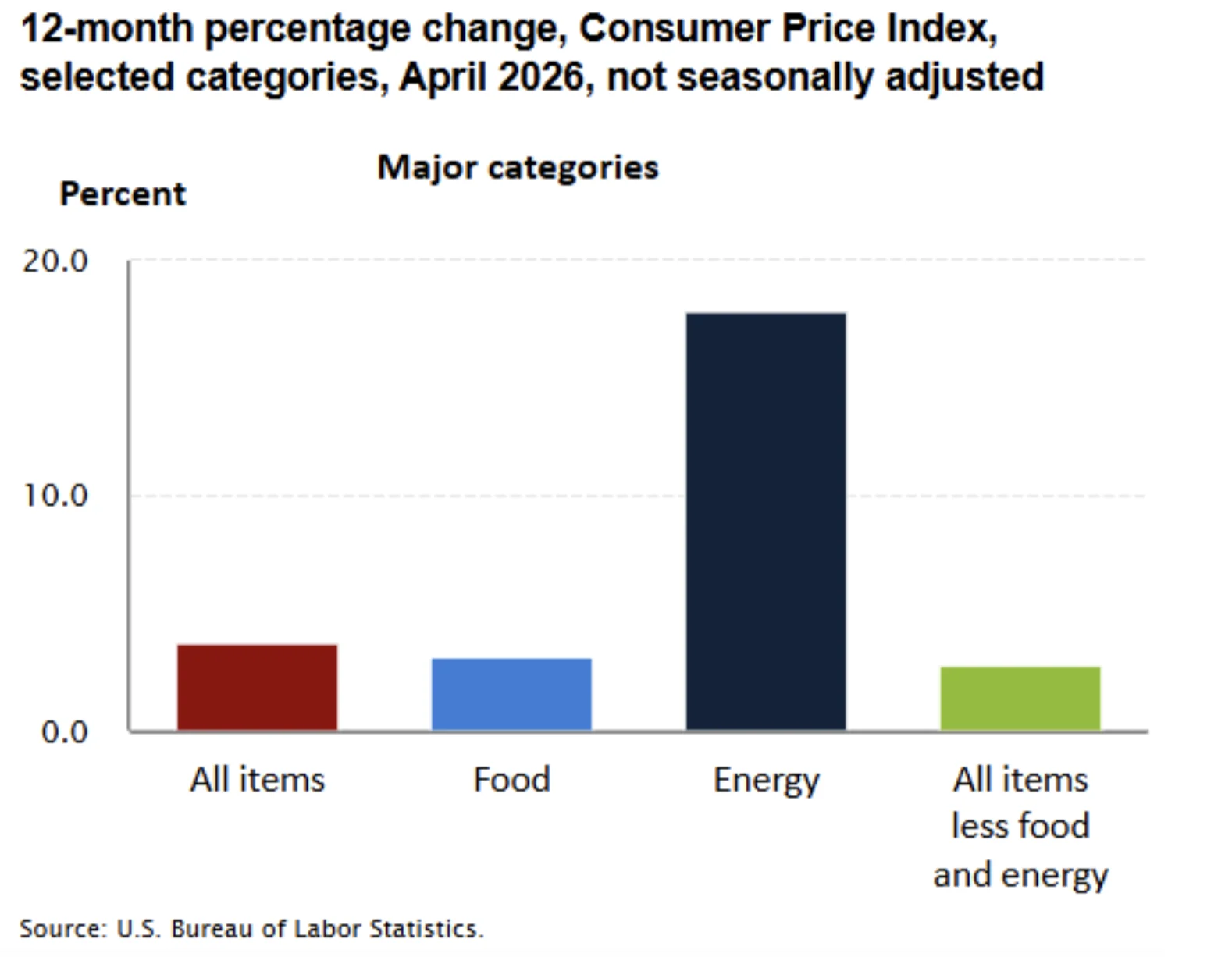
More notably, prices for goods excluding food and fuel increased 0.6% in April alone, while prices including food and fuel rose 0.4%. This suggests that higher energy costs are beginning to ripple through the broader economy, increasing the cost of producing and transporting goods across nearly every sector.
This lagging effect is exactly what many economists expected. When energy prices remain elevated for an extended period, businesses eventually pass those increased costs on to consumers.
Still, while inflation remains above the Federal Reserve’s target, it is far below the peak levels we experienced in 2022. Core inflation currently sits at 2.8%, compared to 6.2% in April 2022.
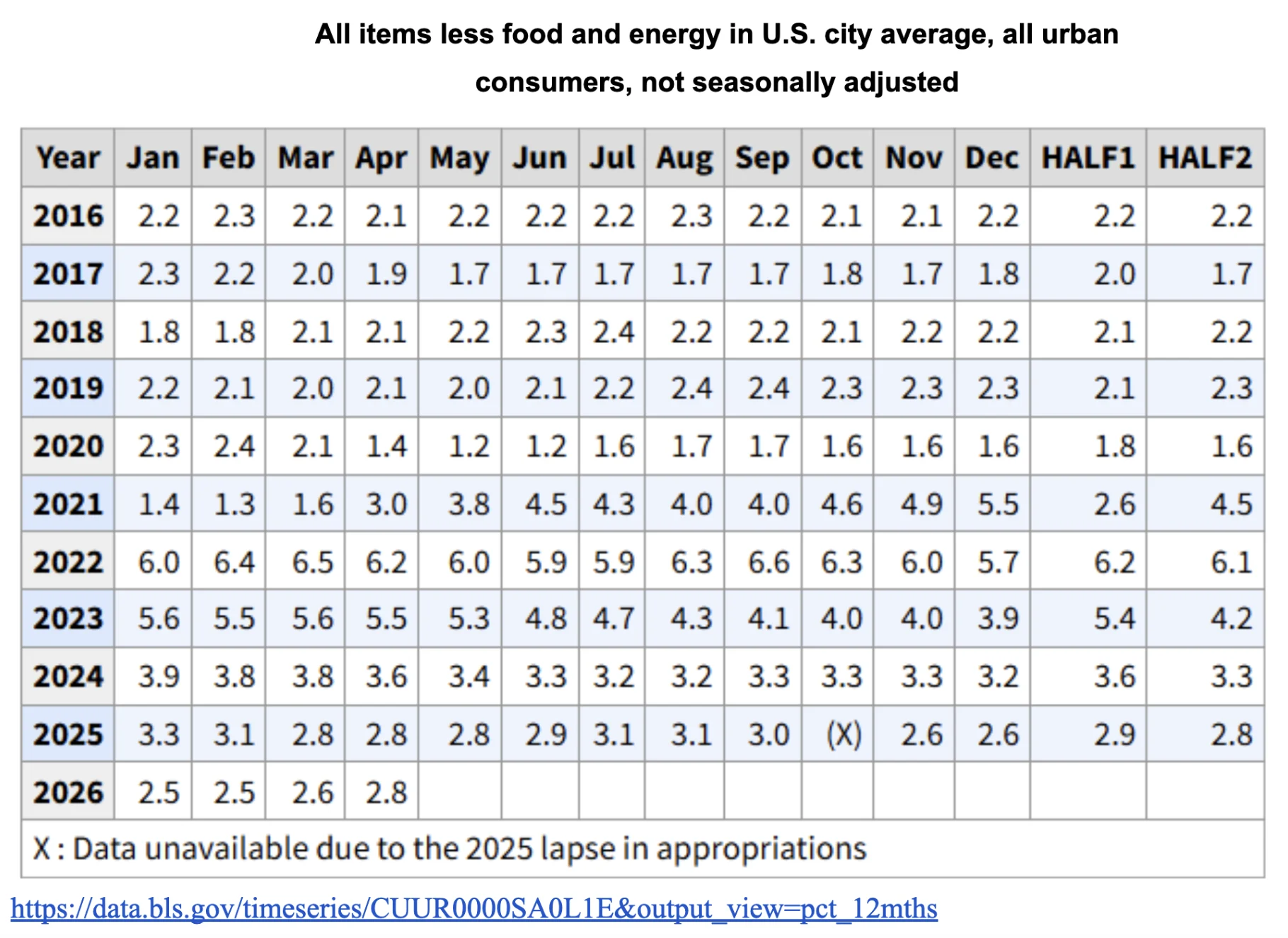
You can view the Bureau of Labor Statistics inflation data here:
Bureau of Labor Statistics CPI Data
Mortgage Rates May Stay Elevated
One unfortunate consequence of persistent inflation is that mortgage rates are unlikely to decline significantly in the near future.
Because inflation remains elevated, the Federal Reserve is less likely to lower interest rates. Treasury yields have also climbed higher, which directly influences borrowing costs across the economy, including mortgage rates.
Earlier this year, mortgage rates had begun falling and even reached a three-year low in February before geopolitical tensions intensified. Since then, rates have started moving higher again.
For many young families, this creates an increasingly difficult housing environment. While today’s mortgage rates are nowhere near the 16% rates seen in the 1980s, home prices relative to income have increased dramatically over the past several decades. Higher financing costs only add additional pressure to affordability.
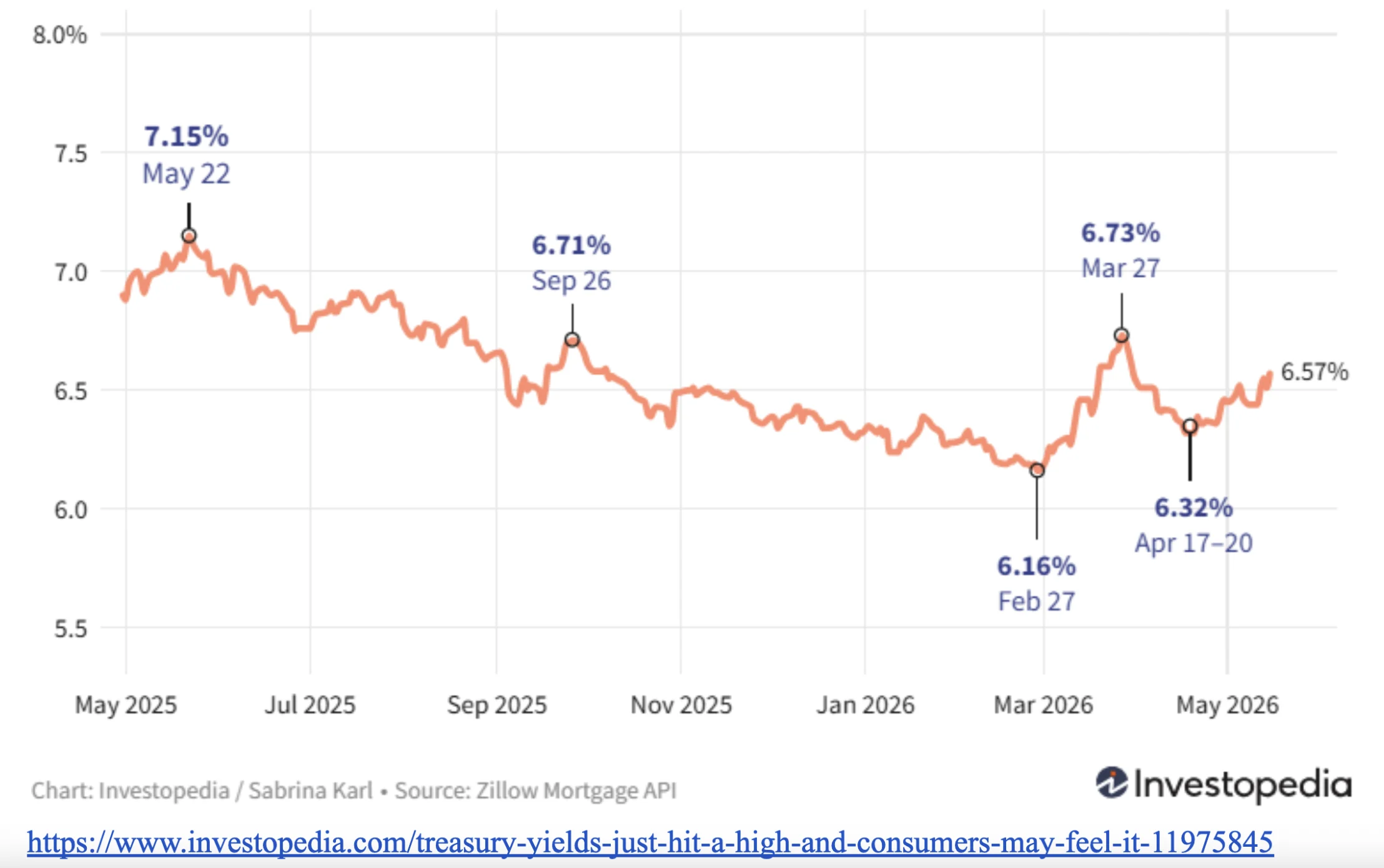
Additional reading on Treasury yields and consumer impact:
Investopedia Treasury Yield Article
AI May Be Creating New Opportunities
In a conversation with a client this week, he mentioned that many companies in his industry are actively hiring people to train, develop, and implement artificial intelligence tools within their field of expertise.
It served as a helpful reminder that technological advancement often creates new categories of work, even while changing or eliminating older ones.
Throughout history, innovation has consistently reshaped the labor market. While AI certainly brings uncertainty, it may also create significant opportunities for those willing to adapt and develop new skills.
When a revolutionary technology appears, there are two emotions that appear as well: fear and greed. Fear for the jobs that will go away. Greed for the money and efficiencies to be gained using the new technology. Put less negatively, many feel at least apprehension for the disruption of the status quo or excitement over the opportunities the new technology offers.
During the Industrial Revolutions of the 1700 and 1800s, inventions like the spinning jenny-which transformed the weaving of clothes, the steam engine–which enabled countless other manufacturing inventions, or the tractor, eliminated hundreds of thousands of jobs. However, they created even more. Those machines needed trained operators, mechanics, and the factories needed construction to be built and managers to run them.
The same thing happened throughout the 20th century as technologies continued to be invented. The internet and computers transformed the world. But while the internet and computers removed the need for some jobs and even industries (phonebooks for instance), it has created many more jobs and industries.
Just because a new invention is new, it can feel like we are wandering into the abyss. And there are absolutely unknowns, but as Solomon pointed out in Ecclesiastes, “there is nothing new under the sun.”
Verse for the Week:
Malachi 3:6 “For I the Lord do not change; therefore you, O children of Jacob, are not consumed.”
Stay Connected
Have questions or topics you’d like us to cover in a future episode? Email us at contact@thelifegroup.org with “Life in the Markets” in the subject line.
✅ Like, comment, and subscribe on YouTube
🎧 Listen to the audio podcast wherever you get your shows
📘 Pick up a copy of The Good Steward to grow in your financial discipleship

Disclaimer: The topics discussed here are for informational purposes only and do not constitute specific investment advice. Investing involves risks, including potential loss of principal. Past performance does not guarantee future results. Securities and advisory services offered through Geneos Wealth Management, member FINRA/SIPC.