Leaving Firm Foundations Part I: Don’t Leave Holes
Written by Stephen Rohrer, Wealth Manager
Don’t dig a pit for those coming after you. Don’t get me wrong, pit digging can be great fun. There are all sorts of cool things in the ground, but we should not leave pits for the next generation to fall into. We must be builders – not just pit diggers. There are three main ways one can be a “pit digger”:
The Wasteful Way:
The first way is to extract resources only to blow through them as quickly as possible – leaving nothing of value behind us. Common selfishness often does this, but it is supremely easy to do this accidentally as well. Without careful thinking, it’s easy to spend every spare dime on things with little long-term value. If it catches our eye, we buy it. This robs us of the opportunity to do big, meaningful things. Instead of investing in projects or tools that will make our family or company better off for decades to come, whatever resources we manage are put to foolish use – leaving nothing but empty pits behind us.
The Way of Shoddiness:
The second way is to leave pits covered with a few flimsy branches. If we don’t purposely think long-term, this short-term mindset creeps in. Suddenly, everything we build or fix is done as cheaply and poorly as possible. Sure, it gets us through, but after decades of doing this, what is left? Those who come behind us – our children or employees – uncover nightmare problems at every turn. Buildings that should be assets turn into liabilities. Our successors look left and a shoddily repaired pipe leaks. They look right and a hastily constructed wall is crumbling. Our heirs start falling into barely covered pits with every step.
We’ve all encountered businesses or homes of both types. You can walk onto a property and feel the shoddy work. Sometimes it looks okay at first glance, but it is only a façade. Cheap materials with a coat of paint are still brittle and impermanent. And it can be felt.
On the other hand, you can walk into a business or home, and it feels solid. It feels substantive. It feels built to last. You may not understand how or even what was done differently, but the craftsmanship, genuine materials, and attention to detail fill the air with a deep sense of permanence.
Now, we all must balance our expenditures between many areas. So, unfortunately, we can’t do everything the best way all at once. But there is immense value in doing things well! We should not lose sight of its worth. It should be a priority – not an afterthought or extravagance.
The Worst Way:
The third way of being a pit digger is to model bad habits to our children or employees. By modeling destructive, selfish, and wasteful habits, we can not only leave messes for others to deal with, but we also make it very likely for our children to fall into the same bad habits, i.e. pits. Instead of helping them, we are making it painful for them just to get back to ground level.
This is the worst way because we not only leave traps, but we are creating more trap makers. The damage grows exponentially through the generations. The number of people harmed by our actions multiplies and the effects ripple far beyond what we will ever know.
It is the inverse of “It’s A Wonderful Life”. Instead of being amazed by how many people our lives have helped, we would be horrified by how many lives have been worsened by our example.
What are we to do instead?
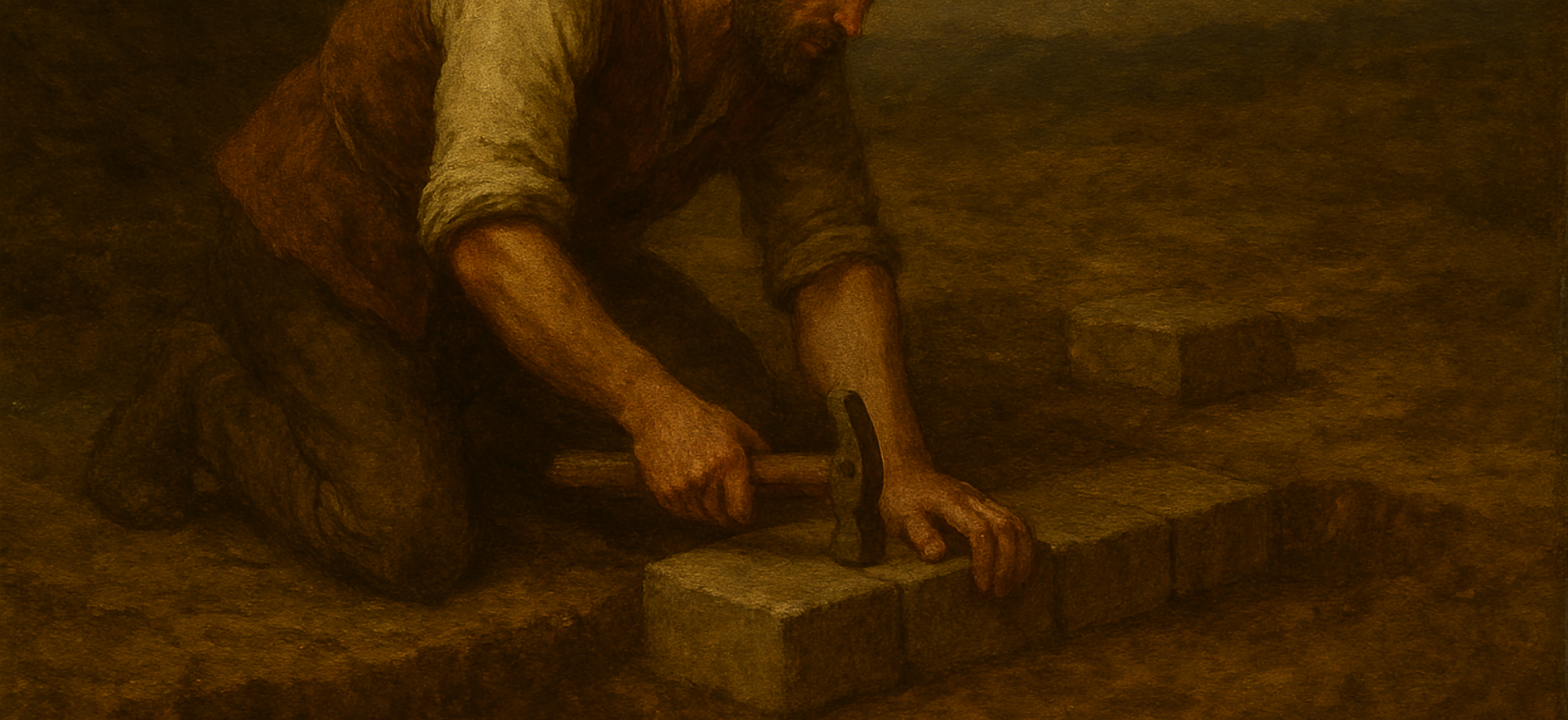
Leave firm foundations. Yes, do work hard digging raw materials and resources out of the ground, but don’t leave empty holes. Steward wisely. As Solomon says, “A good man leaves an inheritance to his children’s children.” (Prov. 13:22a). We must turn those resources into solid foundations–a good inheritance–on which the next generations can build securely.
In Part II of this series, we will delve into the elements that make firm foundations.
All Scripture quotations are from the English Standard Version (ESV) unless otherwise noted.
(This article has been modified by the author from the original form on his blog at Enterprise on Purpose)