By Tim Russell (President & Wealth Manager) at Life Financial Group
Originally shared on the Life in the Markets podcast — 3/30/2026
Subscribe on Apple Podcasts or Spotify.
*Note: you will get the most out of this market update by watching the video above*
Market Update for March 30, 2026
One Month Into the Iran War (2026)
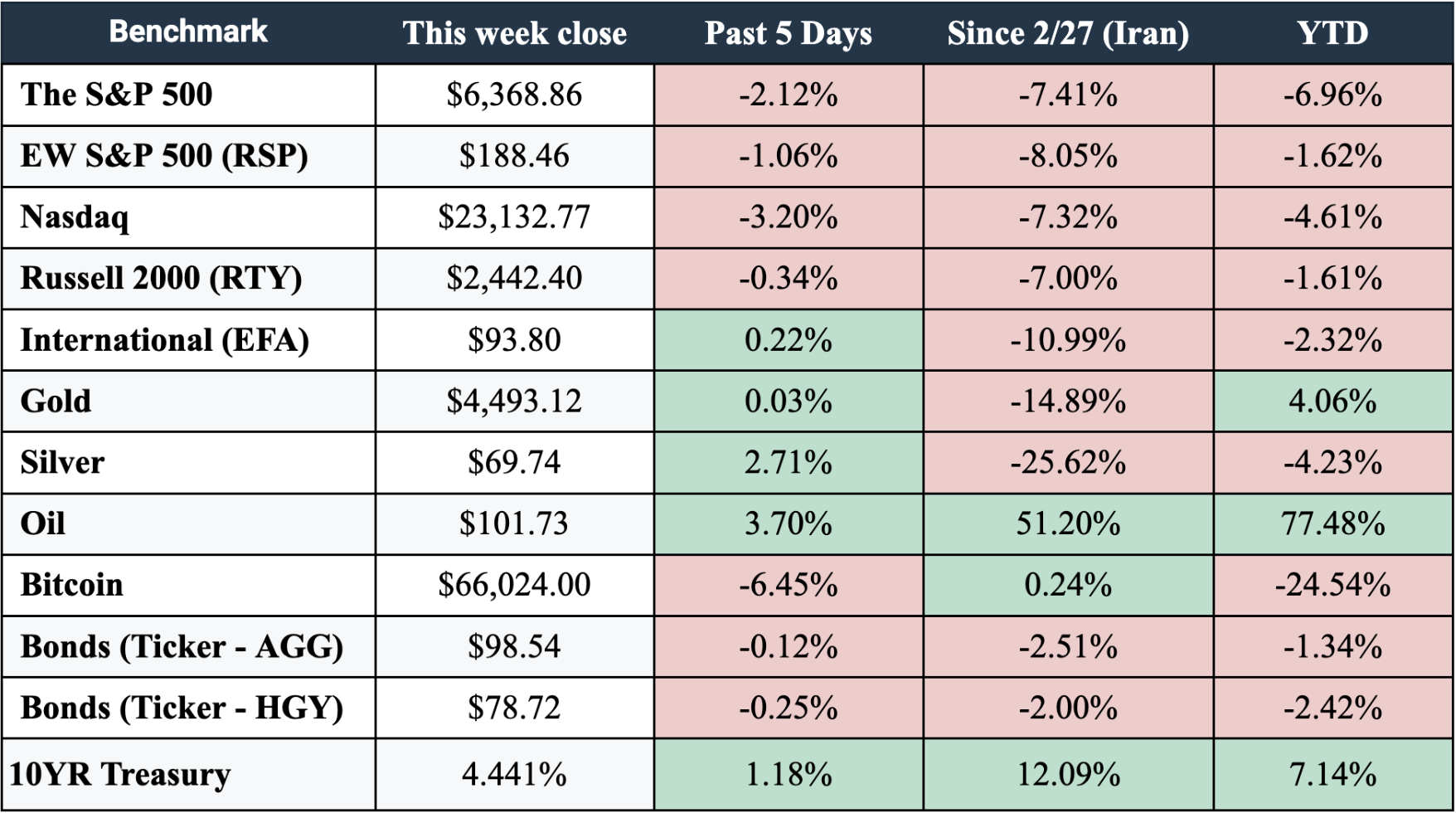
We are now one month into the conflict with Iran, and the markets are beginning to show signs of strain.
If anyone claims they know exactly when this conflict will end or when things will return to normal, take that with caution. The reality is, the only people with a clear picture are those inside the White House and the Pentagon, and that information is not publicly available.
So instead of speculating, let’s focus on what we do know.
What We Know Right Now
Peace Talks
The Trump administration has initiated backchannel negotiations with Iran. At this point, there has been no meaningful public progress, and both sides remain far apart in their demands.
Strait of Hormuz
The Strait of Hormuz, a critical global shipping route, is currently closed to traffic. This narrow passage at the mouth of the Persian Gulf is responsible for roughly 25 percent of global seaborne oil and 20 percent of liquefied natural gas transport.
With the strait effectively shut down, global energy supply chains are under significant pressure.

Oil Prices
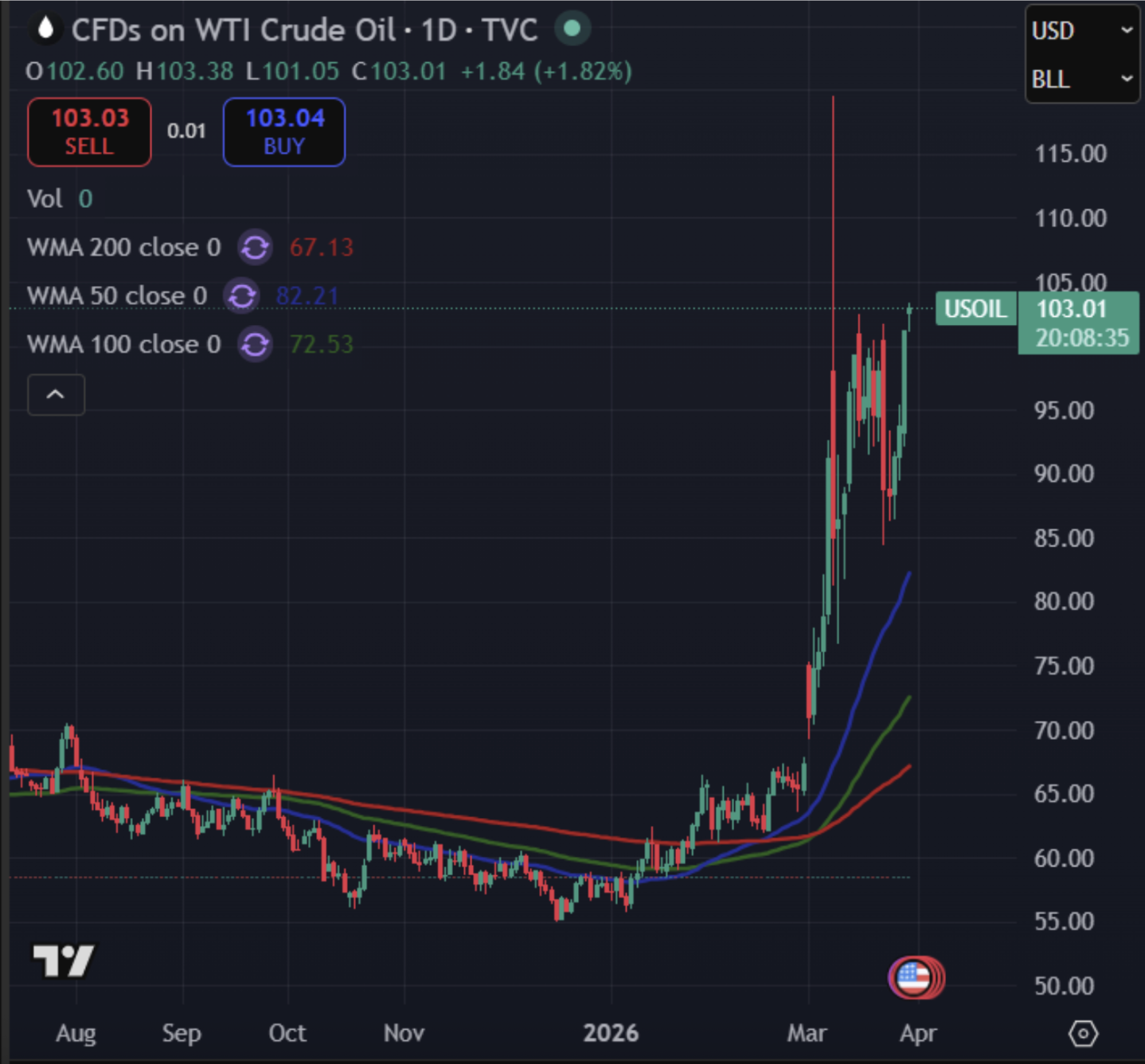
West Texas Intermediate crude oil has climbed above $100 per barrel. Early in the conflict, prices briefly surged near $120 before pulling back, but they have remained elevated and continue trending upward.
If oil prices stay at these levels, we can expect slower economic growth and increased inflationary pressure.
Global Energy Shortages
The ripple effects are being felt worldwide. Several countries are already dealing with severe energy constraints:
- Philippines: Declared a national energy emergency
- Pakistan: Implemented a four-day work week and closed schools
- Sri Lanka: Limited fuel access to 15 liters per week per person
- Bangladesh: Experiencing widespread power outages
- Myanmar: Introduced fuel rationing systems
- Cambodia: One-third of petrol stations have shut down
- Thailand and Vietnam: Enforcing energy conservation measures
- China: Facing rising prices and supply chain disruptions
- Slovenia: First EU country to begin fuel rationing
- Germany and France: Reporting low energy storage levels
- Netherlands: Critically low gas reserves
- Egypt: Mandated early business closures to conserve energy
- Cuba: Experiencing nationwide grid failures
- Kenya and Uganda: Facing fuel shortages
- Mauritius: Reporting low fuel supplies
There’s Oil in Everything
Petroleum based products are seeing price increases and supply shortages. This includes plastics, jet fuel and others.
Bond Continue to Struggle
Last week, we saw a continuance of weak demand for US Treasury bonds. This has led to an increase in interest rates in the treasury market. The chart below compares current yields (in blue) to Feb yields (in black).

What Should Investors Do?
1. Stay the Course (For Long-Term Investors)
For long-term investors, the best course of action is often no action at all.
The short-term outcome of this conflict is unknowable. Making major changes to a long-term investment strategy based on short-term uncertainty is rarely a wise decision. Whether this conflict resolves quickly or drags on, its impact is unlikely to derail a disciplined, long-term plan.
2. Raise Cash for Short-Term Needs
If you expect to need funds within the next 12 months, consider moving that money out of the market.
As a general rule, money needed within one to two years should not be exposed to market volatility. If that applies to you, now is a good time to reduce risk and increase liquidity.
3. Rebalance Strategically
If your portfolio is heavily weighted toward large-cap growth stocks (such as the S&P 500), this may be an opportunity to rebalance.
Consider gradually shifting some exposure toward:
- International equities
- Value-oriented investments
These areas may offer more attractive valuations in the current environment.
4. Put Idle Cash to Work
For investors with a long-term time horizon and cash on the sidelines, this environment may present opportunity.
Periods of uncertainty often create more attractive entry points. International markets and U.S. value stocks, in particular, may offer compelling long-term potential.
Final Thoughts
Uncertainty can feel uncomfortable, especially during geopolitical conflict. But disciplined investing is not about reacting to headlines. It is about sticking to a sound strategy through all market conditions.
Stay focused. Stay diversified. Stay patient.
And remember: all investing involves risk, including the potential for loss.
Stay Connected
Have questions or topics you’d like us to cover in a future episode? Email us at contact@thelifegroup.org with “Life in the Markets” in the subject line.
✅ Like, comment, and subscribe on YouTube
🎧 Listen to the audio podcast wherever you get your shows
📘 Pick up a copy of The Good Steward to grow in your financial discipleship
Disclaimer: The topics discussed here are for informational purposes only and do not constitute specific investment advice. Investing involves risks, including potential loss of principal. Past performance does not guarantee future results. Securities and advisory services offered through Geneos Wealth Management, member FINRA/SIPC.